
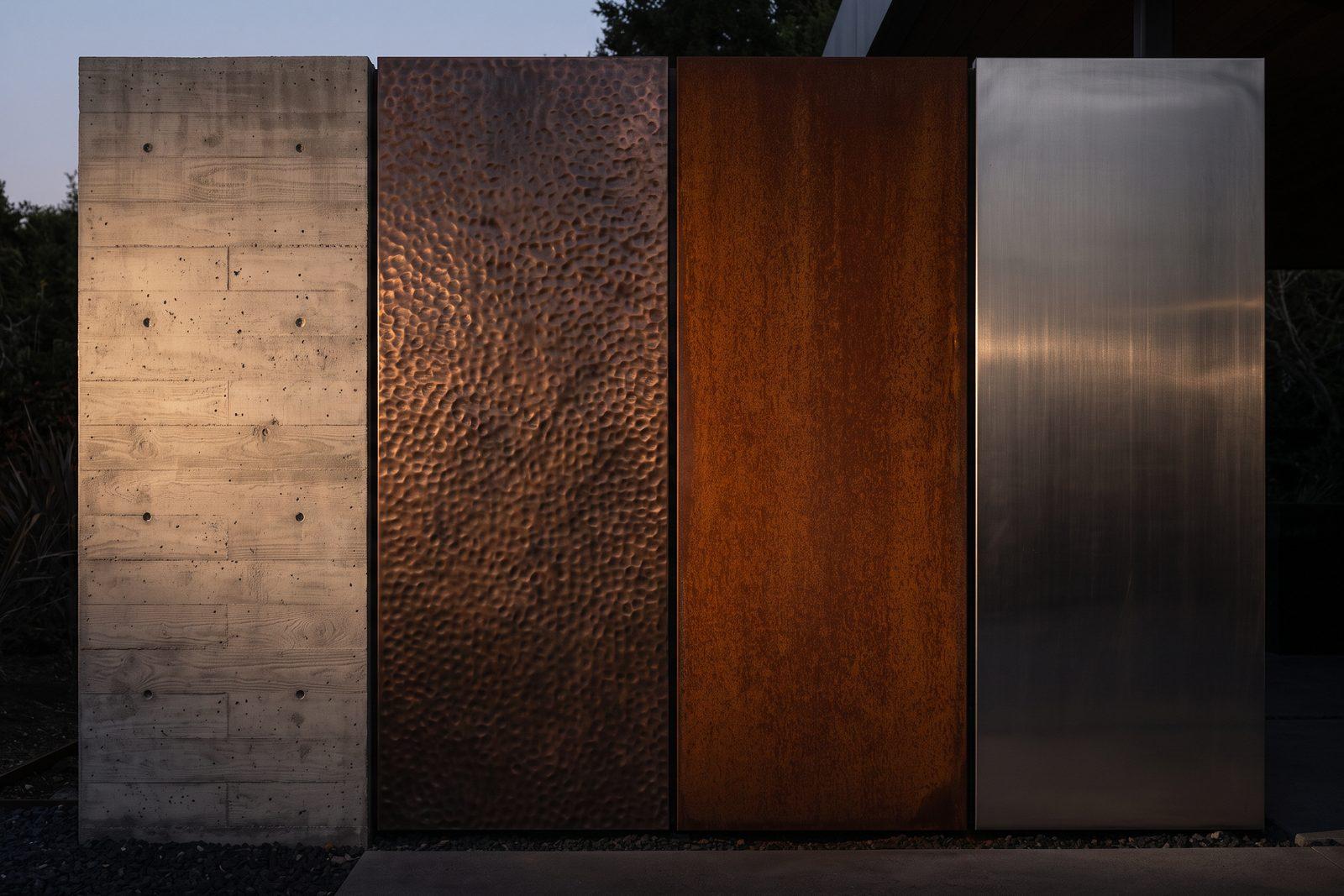
Pick GFRC if you want a heavy piece that keeps its color with a cover and a periodic seal. Pick corten or copper if you want the surface to keep changing for years, raw steel for wood fires on paving you don't mind marking, and stainless for the least upkeep, in Type 316 near salt water. On the gas pieces we checked, the flame sits in a stainless pan whatever the body is made of. The shell decides weight, weathering and looks, and it has no bearing on how the fire burns.
Every figure below comes from the maker's own documents or a published material standard, linked where it appears. We don't sell any of these brands yet.
Materials Compared
Material, What changes outdoors, Care, What the warranty says
GFRC (Prism)
- What changes outdoors
- Color can fade with exposure
- Care
- Mild soap, no acid cleaners or pressure washing, cover it, reseal
- What the warranty says
- 2-year limited (Prism); 1 year (The Outdoor Plus)
Corten
- What changes outdoors
- Rusts to a brown patina; runoff stains concrete
- Care
- Let it drain and dry out between wettings
- What the warranty says
- Natural weathering not warrantied (The Outdoor Plus)
Copper
- What changes outdoors
- Salmon to brown, then blue-green in moist climates
- Care
- None required to patina
- What the warranty says
- Weathering not warrantied (The Outdoor Plus); 3 years, "normal weathering expected" (HPC)
Carbon steel (Ohio Flame)
- What changes outdoors
- Orange-brown patina that darkens
- Care
- Set it on flagstone or pavers; clear ash
- What the warranty says
- Lifetime against rust-through on registered bowls; finishes excluded
Stainless
- What changes outdoors
- Can show surface rust or tea staining
- Care
- Choose 316 near salt water
- What the warranty says
- Surface rust excluded (The Outdoor Plus)
GFRC Concrete
GFRC is glass-fiber reinforced concrete. The fiber has to survive the alkali in cement, which is what ASTM C1666 covers, and the precast industry's guide specification calls for alkali-resistant fiber with at least 16 percent zirconia.
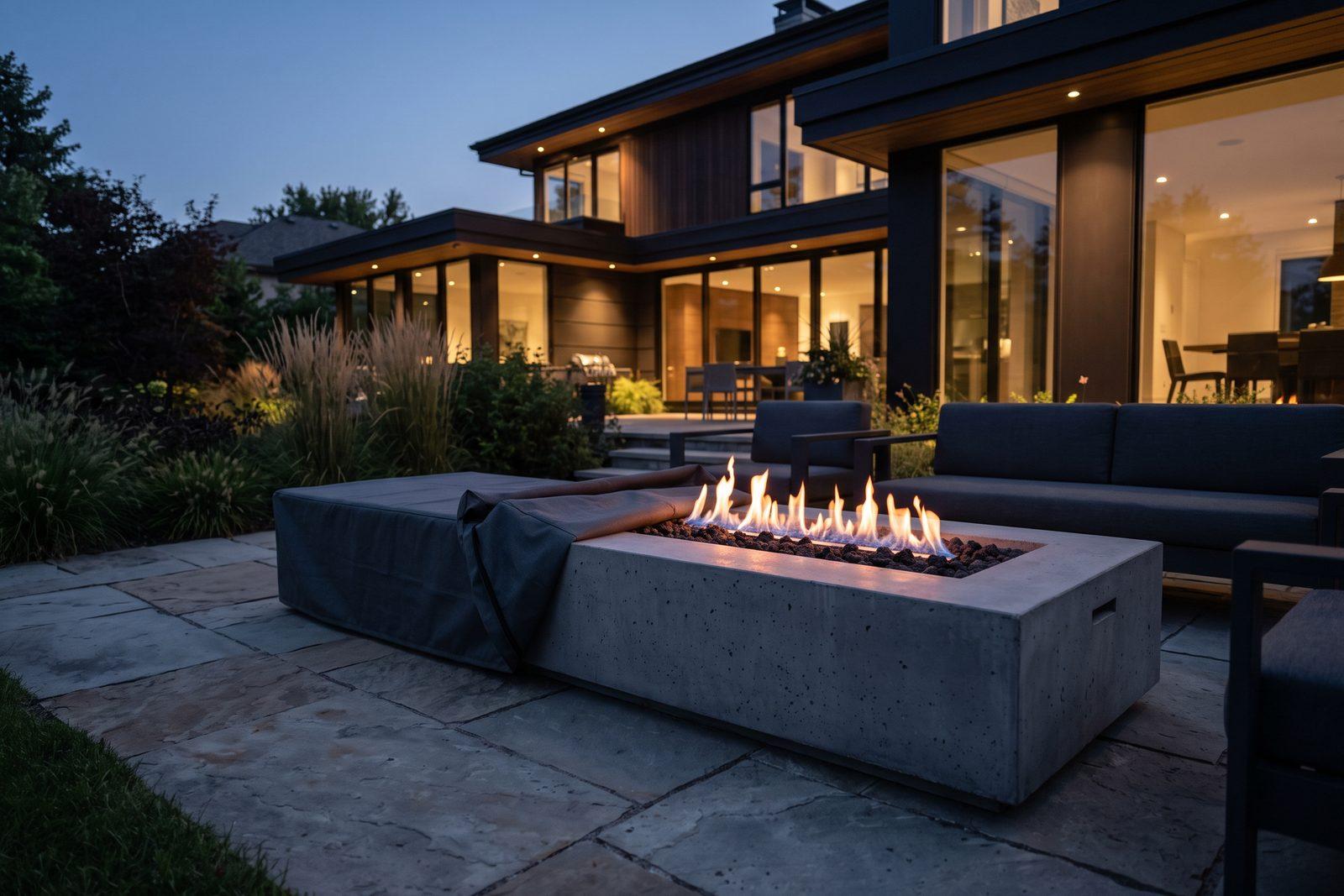
Weight. Prism calls GFRC significantly lighter than traditional concrete, and it is, but a finished piece is still heavy. Prism's Embarcadero guide lists the 48 inch bowl at 225 lb and the 60 inch at 350 lb, and its Tavola tables run from 205 to 650 lb. For comparison, a 24 inch Ohio Flame Liberty steel pit is 47 lb. Plan how a 300 lb crate gets from the curb to the patio before you order.
Freeze-thaw. Prism says GFRC holds up to outdoor freeze-thaw cycles. Whether a given piece does depends on its mix. The PCI specification calls for air entrainment, at 8 to 10 percent air, where panels face freeze-thaw and the maker doesn't use a polymer curing admixture. You can't see that in a photo, so if your winters freeze hard, ask the maker how its mix is designed for it.
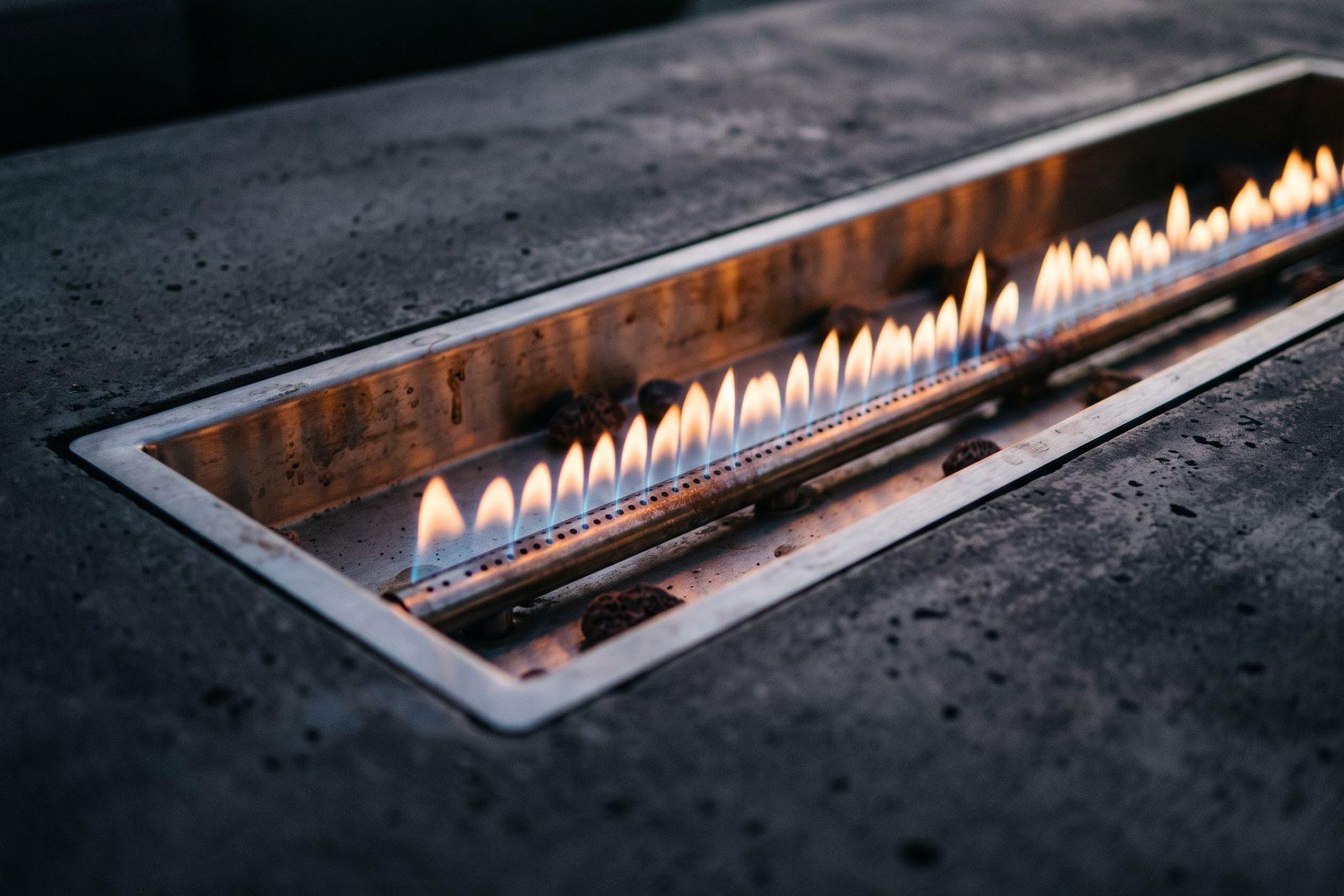
Heat. The concrete doesn't hold the flame. Prism's gas pieces use a stainless burner insert, and its wood-burning Falo bowls put a high-heat powder-coated steel pan inside the GFRC shell. Wet media is the bigger hazard: Prism says not to light the feature when the rocks or glass are wet, because they can crack and burst.
Care. Prism asks for mild soap and a soft cloth, no acidic cleaners, pressure washing or abrasive pads, and a cover when the piece is not in use. Its care section recommends resealing with a water-based concrete sealer after two years, and its troubleshooting table answers color fading with a coat of cement sealer every year. In full sun I'd follow the yearly figure.
Corten Weathering Steel
Corten is the common name for weathering steel. Its ASTM specifications, A588 for structural steel and A606 Type 4 for sheet, describe steels with atmospheric corrosion resistance substantially better than carbon steel, usable bare when properly exposed. The fire pit pages we read say "corten" without naming a specification, so ask which one.
It needs to dry out. The steel bridge industry's weathering steel manual says the steel needs dry cycles, and that continuous moisture prevents the patina from forming. The Federal Highway Administration's advisory urges caution where the steel is wet more than 60 percent of the time, and flags marine coastal areas. A corten bowl that holds water, or sits in sprinkler spray, won't stabilize the way the brochure photo suggests.
It stains. The FHWA advisory says runoff from weathering steel "leaves dark, nonuniform and often unsightly stains on concrete surfaces," and the bridge manual says the risk is greatest while the patina is first forming. I wouldn't set a new corten pit on light concrete or travertine without a plan for where the water goes.
Warranty. The Outdoor Plus does not warranty natural weathering of corten. Only buy corten if you want the color change.
Copper
Copper changes color for years. The Copper Development Association's design handbook says that in moist climates it starts reddish salmon pink, moves through deepening browns, and ends at the greenish blue of a mature patina. In arid climates it moves through browns to a walnut hue. The handbook's color chart for a typical moist industrial climate runs from 2 years out to 25 to 30. In Phoenix, plan on brown.
Construction varies by maker. Prism's Copper Collection is hand hammered, 99.9 percent copper, and The Outdoor Plus offers hammered or raw copper on the same bowl shapes it sells in concrete and steel.
The warranties set expectations. The Outdoor Plus excludes natural weathering of copper. HPC covers its Copper Bowl Series for three years residential with "normal weathering expected" (HPC warranty). If you want copper to stay bright, choose a different material.
Carbon Steel and Powder Coat
Raw carbon steel is the classic wood-burning pit, and Ohio Flame builds its line from it. Ohio Flame's warranty page says its natural finish develops an iron oxide patina that darkens slightly over time, on steel from 3/16 to 1/4 inch thick depending on size. The lifetime warranty on registered bowls promises the steel will not rust through, and excludes screens, grates, paint and finishes.
The cost lands on your paving. Ohio Flame's FAQ recommends setting the pit on flagstone or pavers, because ash falls from the rain drain and the steel may cause rust transfer that shows more on lighter hardscape. It also says not to put its fire pits on wooden decks.
Powder coat covers the steel with a finish. The Outdoor Plus warranties its powder-coated fire pits and bowls for one year, the same as GFRC and stainless.
Stainless Steel
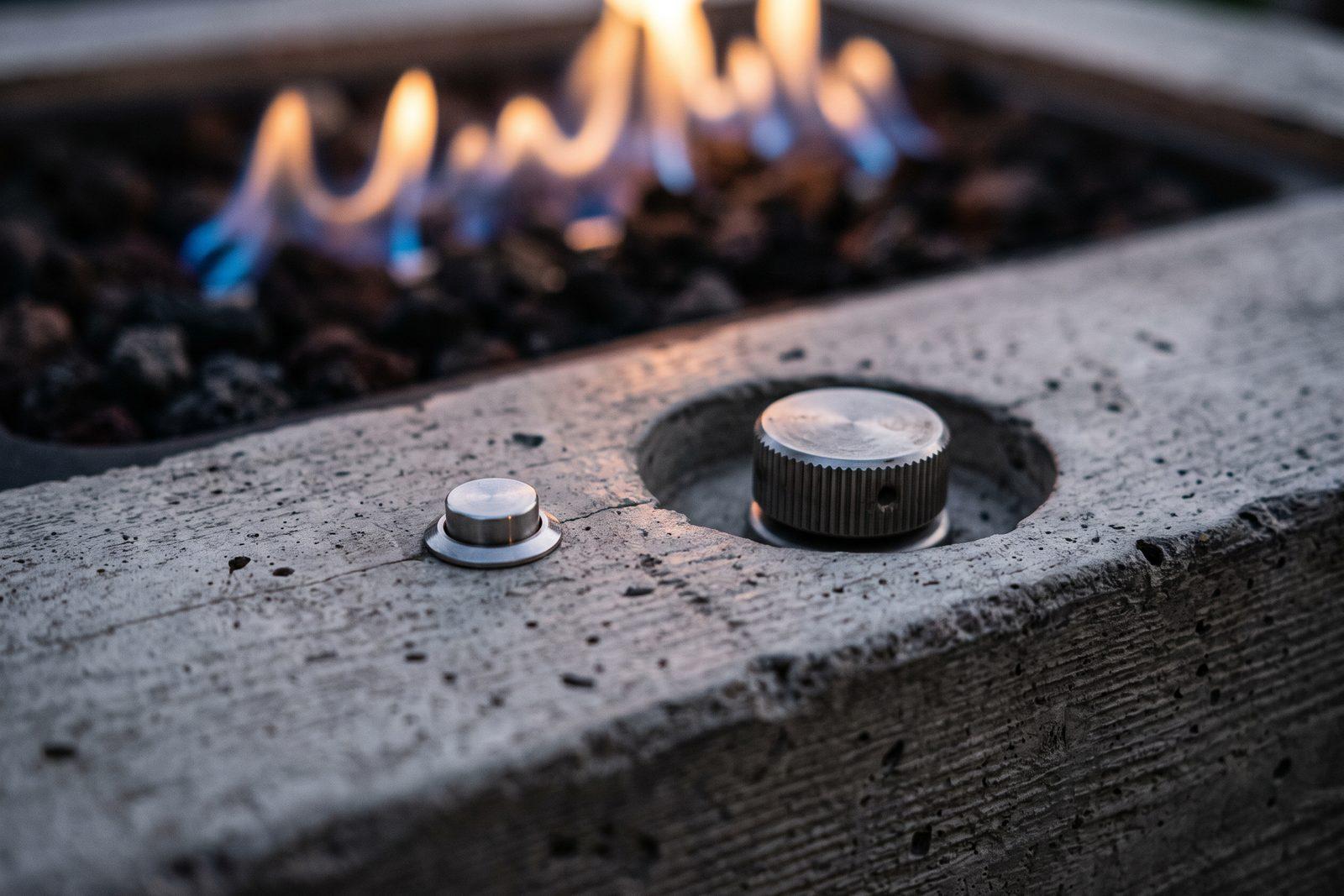
Stainless needs the least upkeep of these metals, and it can still rust. The Outdoor Plus says it is not responsible for surface-level rust on stainless products. Near salt, the grade matters. Type 316 contains 2 percent molybdenum, which the International Molybdenum Association says is particularly helpful in preventing chloride damage. Its coastal guidance describes 316 working well from about 0.12 to 10 miles from a large body of salt water, where rain washes the surfaces, and light tea staining on 316 in harsher spots: right on the water, or sheltered from rain.
Manufacturers offer 316 as the coastal upgrade. Infratech sells a Marine UpGrade in 316 over its standard 304, Bromic builds its Marine heaters in AISI 316, and The Outdoor Plus offers both grades. In the gas pieces we checked, the pan under the flame is stainless too. The Outdoor Plus covers its stainless pans for five years residential, and HPC gives its stainless burners a lifetime warranty.
Water Does More Damage Than Heat
Across these manuals, the warnings about water outnumber the warnings about heat. The Outdoor Plus fire bowl manual says water in the burner pipe will block gas flow and tells you to keep the drain hole clear. Its insert manual says not to use a fire feature if any part has been under water, and to let a fire burn 45 minutes before coming within 15 feet if the lava rock is wet. Both The Outdoor Plus and HPC require a cover when the fire pit is not in use, and both warn that granite, marble and other dense stone can crack near flame. Whatever the shell, buy the cover and keep the drain clear.
What Drives the Cost
We don't publish prices. The documents do show what moves them.
- Weight and freight. A 350 lb concrete bowl ships by freight and needs people or equipment to place it.
- Hand work. Prism finishes its GFRC by hand, and its copper bowls are hand hammered.
- Grade and thickness. 316 stainless is sold as an upgrade over 304, and Ohio Flame's steel runs 3/16 to 1/4 inch depending on size and model.
- The burner and ignition. The Outdoor Plus sells the same shape in several materials and offers several ignition systems on most of them, so two pits with the same body can differ in cost for reasons unrelated to the shell.
My Pick by Site and Climate
Near the ocean, I'd choose 316 stainless or GFRC over corten. On light concrete, I'd choose GFRC or stainless over new corten or raw steel. In a dry climate corten gets the dry spells it needs, and copper stays brown instead of going green. For a wood fire, use steel: even Prism's wood bowls put a steel pan inside the concrete. If you want it to look the same in five years, choose GFRC with a cover or stainless, and skip copper and corten.
Whatever you choose, the distance to the house comes from the installation manual, and the material doesn't change it. Check yours with the clearance checker. If you're filling a burner pan, the fire glass calculator gives you the amount.
Sources
- ASTM International, C1666/C1666M-08(2023), Standard Specification for Alkali Resistant (AR) Glass Fiber for GFRC and Fiber-Reinforced Concrete and Cement, store page (scope)Checked
- Precast/Prestressed Concrete Institute, Guide Specification, Section 03491, Glass Fiber Reinforced Concrete (2011): glass fibers (alkali resistant, minimum 16 percent zirconia, ASTM C1666) and air content for freeze-thaw exposureChecked
- Prism Hardscapes, Frequently Asked Questions (GFRC, freeze-thaw, care)Checked
- Prism Hardscapes, Embarcadero Series Installation Guide: product weights (PDF p. 3), wet media warning (PDF p. 9), Caring for Unit (PDF p. 12), color fading (PDF p. 14), 2-year limited warrantyChecked
- Prism Hardscapes, Tavola Series product page (Tavola 1 at 205 lb, Tavola 5 at 650 lb)Checked
- Prism Hardscapes, Copper Collection product page (hand hammered 99.9% copper)Checked
- Prism Hardscapes, Wood Burning Collection product page (Falo: GFRC shell, high heat powder coated steel pan)Checked
- ASTM International, A588/A588M-24, Standard Specification for High-Strength Low-Alloy Structural Steel, up to 50 ksi Minimum Yield Point, with Atmospheric Corrosion Resistance, store page (scope)Checked
- ASTM International, A606/A606M-25, Standard Specification for Steel, Sheet and Strip, High-Strength, Low-Alloy, Hot-Rolled and Cold-Rolled, with Improved Atmospheric Corrosion Resistance, store page (scope, Type 4)Checked
- Federal Highway Administration, Technical Advisory T 5140.22, Uncoated Weathering Steel in Structures, October 3, 1989 (time of wetness, coastal areas, staining of concrete)Checked
- Thomas Murphy and Jennifer McConnell, NSBA Uncoated Weathering Steel Manual (presentation, 2022), Short Span Steel Bridge Alliance, slides 27 and 37Checked
- Copper Development Association, Copper, Brass, Bronze Design Handbook: Architectural Applications (A4039, 2015), p. 11 and Figure III-7 (copy hosted by the National Ornamental and Miscellaneous Metals Association)Checked
- The Outdoor Plus, 2025 Product Warranty (PDF): warranty periods by material, natural weathering of copper and corten, surface rust on stainless steelChecked
- The Outdoor Plus, Cazo Fire Bowl product page (GFRC, hammered or raw copper, corten, 304 and 316 stainless, powder coat options)Checked
- The Outdoor Plus, Fire Bowl Installation Manual, Match Lit (FB-ML-M, 2026): dense stone near flame (PDF p. 5), drainage and water in the burner pipe (PDF p. 13)Checked
- The Outdoor Plus, Match Lit Fire Pit Insert Manual (2024): wet lava rock and submerged parts (PDF p. 6)Checked
- HPC Fire Inspired (Hearth Products Controls), Match Lit Fire Pit Insert, Installation and Operation Instructions (870): dense stone near flame, cover when not in useChecked
- HPC Fire Inspired, Warranty Information (Copper Bowl Series, normal weathering expected; stainless steel burners)Checked
- Ohio Flame, Lifetime Warranty (natural steel patina, steel thickness, coverage)Checked
- Ohio Flame, FAQ (patina; placing the fire pit on flagstone or pavers; rust transfer on lighter hardscapes; wooden decks)Checked
- Ohio Flame, Liberty Fire Pits collection (24 in. at 47 lb; rain drain with blocking plate)Checked
- Catherine Houska, TMR Stainless (consultants to IMOA), Molybdenum Keeps Street Handrails Safe and Attractive, International Molybdenum AssociationChecked
- International Molybdenum Association, Stainless Solutions, January 2015, Assessing the Corrosiveness of Coastal EnvironmentsChecked
- Infratech, C-Series and W-Series Comparison sheet (304 stainless; Marine UpGrade 316 stainless)Checked
- Bromic Heating, Platinum Smart-Heat Electric Marine product page (AISI 316 stainless)Checked
About the Author
James Darren Writes the Firepit HQ guides on fire features, fuel and fire codes. Every figure in them is cited to its source with the date it was checked.