
To winterize a gas fire pit, let it cool, clear debris and water out of the burner and media, shut the gas off at the source, take any propane cylinder off the unit and store it upright outdoors, and put a cover on a dry top. The manuals reviewed here treat a cover as the normal winter answer, and none gives a minimum temperature for use. A propane cylinder never goes in a garage, shed or basement, winter included.
Every step below comes from a manual or safety guide linked where it appears. This compares published documents and tests no product. Gas work stays with a qualified service technician or a licensed gas fitter.
Can You Leave a Gas Fire Pit Outside in Winter?
The manuals assume you can, with preparation.
| Maker | Winter or storage instruction | Where |
|---|---|---|
| HPC | Cover whenever not in use, after the unit cools. Its covers "protect it from rain, snow, and moisture." Gas valve off when not in operation | Push-button insert, pp. 21 to 25 |
| The Outdoor Plus | Cover whenever not in use, a warranty requirement. Turn the gas off at the source. Indoor storage only if disconnected from the fuel supply | Bowl manual p. 11; fire pit manual p. 16 |
| Firegear | Ventilated cover for cold climates and wet seasons. Let a soaked unit dry before use. Temporary indoor storage only if disconnected from the fuel supply | Pro H, pp. 11 and 13 |
| Real Flame | Gas off at the tank, cylinder out and stored outside, filler secured, igniter battery out, cover without pooled water, unit stored cool and dry | Forest Ridge, p. 11 |
| Prism | Use a designated fire pit or barbecue cover when not in use. Annual service by a gas technician | Moderno, PDF p. 9 |
| Outdoor GreatRoom | Winter and spring checklists. Covering is not mandatory but is recommended for extended periods | FAQ |
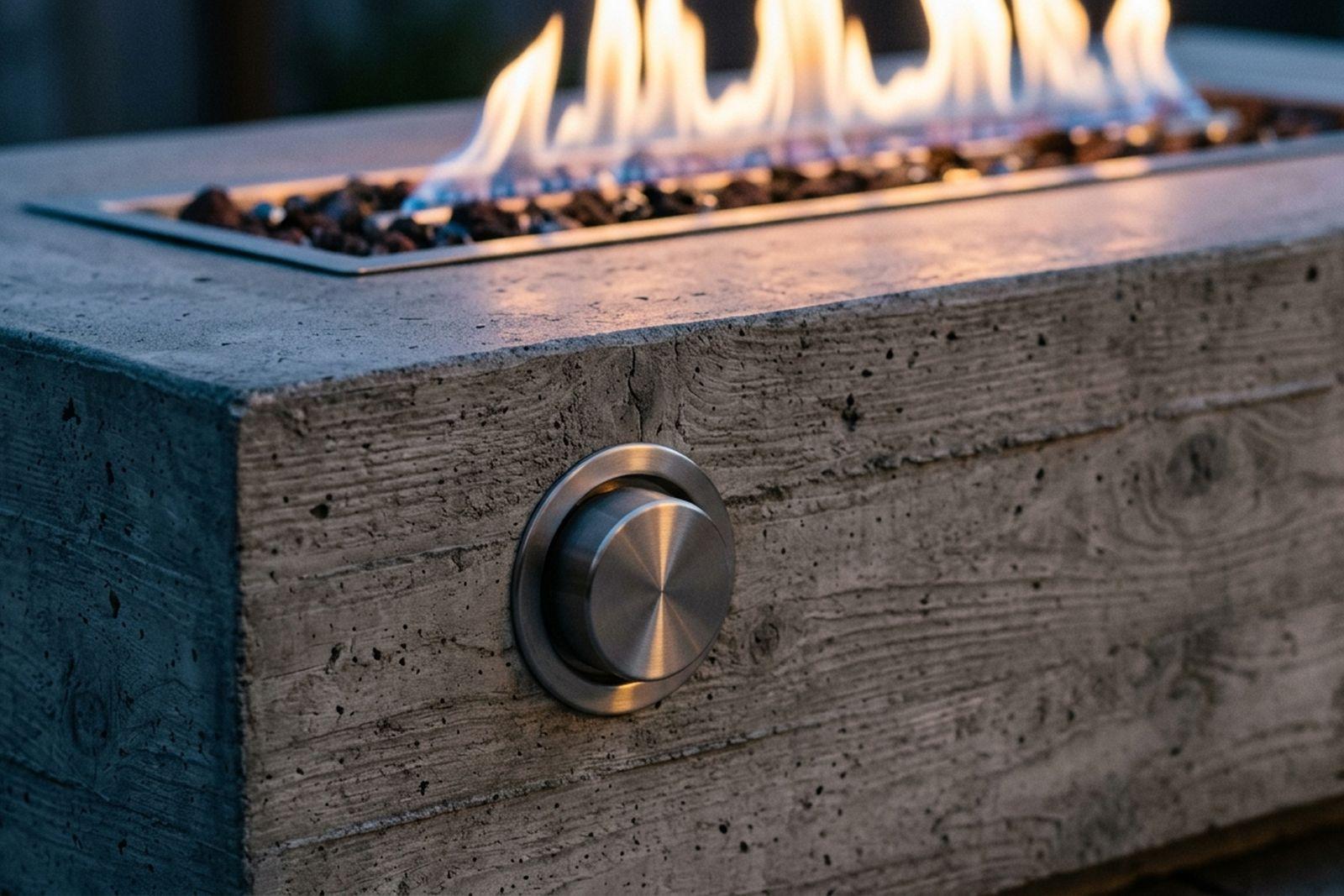
None of these manuals gives a minimum temperature for operation. Real Flame says cold can lower cylinder pressure and the flame and not to use the fireplace in extreme temperature conditions, and Firegear says winter and seasonal operation may be affected by weather. The Outdoor Plus allows indoor storage, and Firegear temporary indoor storage, only if the unit is disconnected from its fuel supply. Concrete tables are heavy, and the materials guide lists weights.
How to Winterize a Gas Fire Pit, Step by Step
- Shut it off and let it cool. Real Flame says not to inspect, clean, move or store the fireplace until the flames are out and every part is cool to the touch. HPC says the gas must be off and the unit cool before servicing.
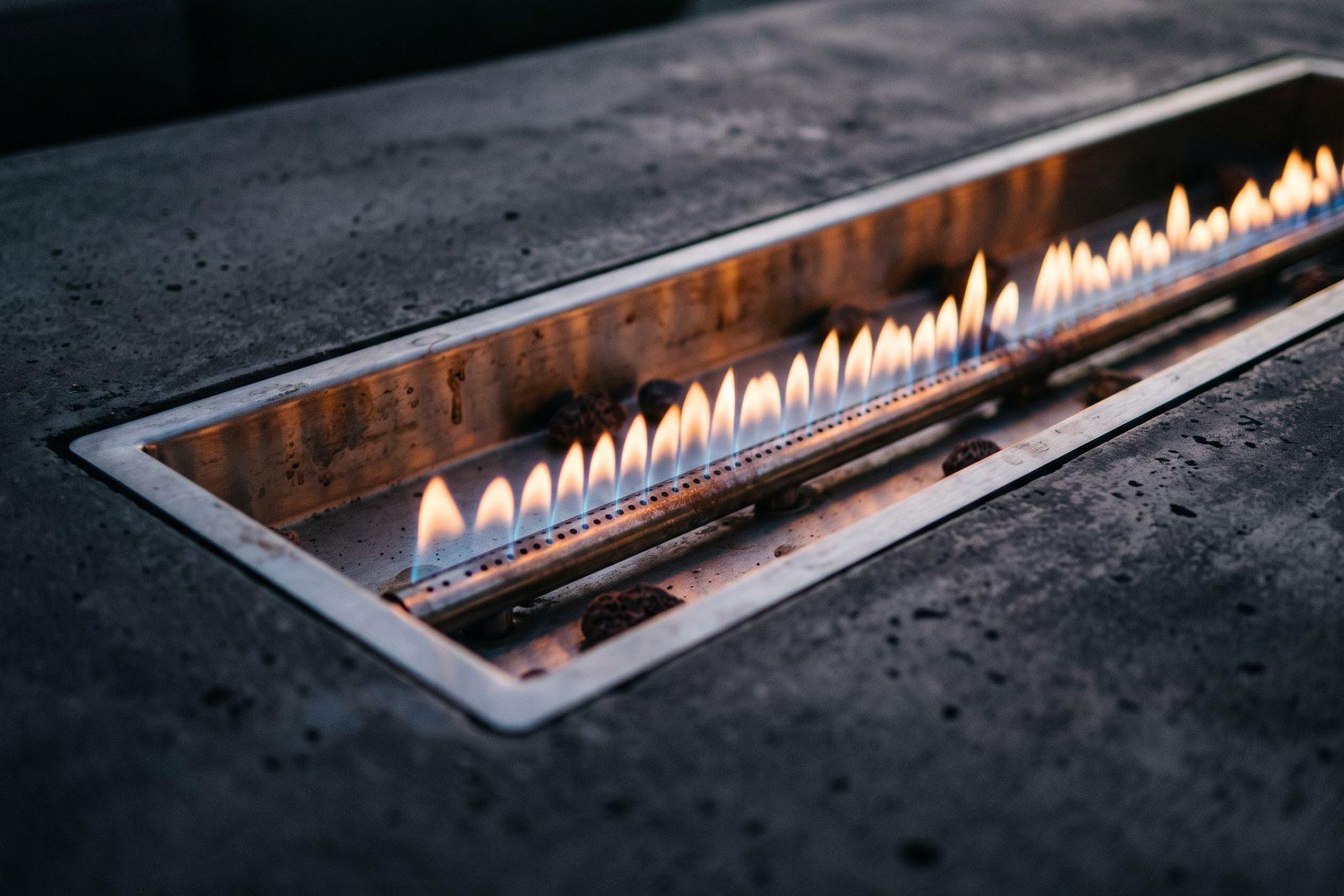
- Clear the burner. Outdoor GreatRoom's winter checklist starts with removing leaves and dirt from the burner, and HPC says to keep the fire pit covered and free of debris.
- Close the gas valve. Turn off the valve at the fire pit and the gas at the source. The section on turning the gas off covers the details.
- Take the cylinder off the unit. Outdoor GreatRoom's list removes the LP tank from the base, and Real Flame's does too. Where it goes is covered below.
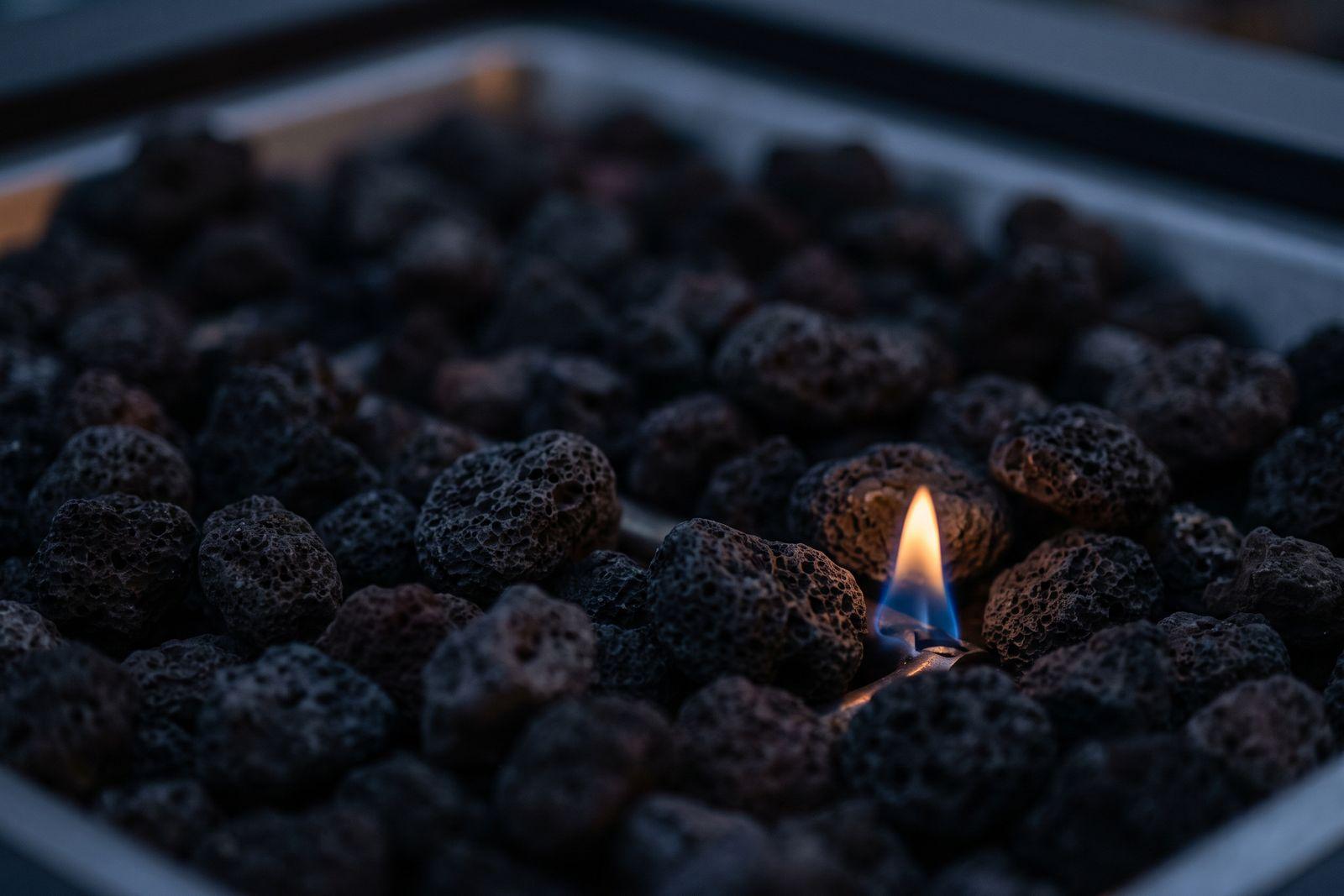
- Deal with the media. Outdoor GreatRoom calls lifting out glass gems to clean them optional, winter or spring. Real Flame says to secure loose filler. The drain section below covers weep holes and wet media.
- Power the electronics down. Real Flame says to take the battery out of the igniter box. Outdoor GreatRoom's 2024 winter post says that if you won't use a direct spark system over the winter, unplug its small transformer and bring it indoors, because it does not take well to cold weather. HPC says a remote-controlled electronic unit also needs the power to the outlet, or the gas, turned off to prevent an accidental start. Anything hard wired is a licensed electrician's.
- Wipe it down and let it dry. Outdoor GreatRoom says to wipe down the top and burner. Real Flame says to use mild soap and water and never oven cleaners or abrasive solvents. Prism says to avoid acidic cleaners, pressure washing and abrasive pads on its GFRC.
- Cover it. The next section has the rules.
Fire Pit Cover Rules: Cool, Dry and Vented
The manuals set conditions on the cover.
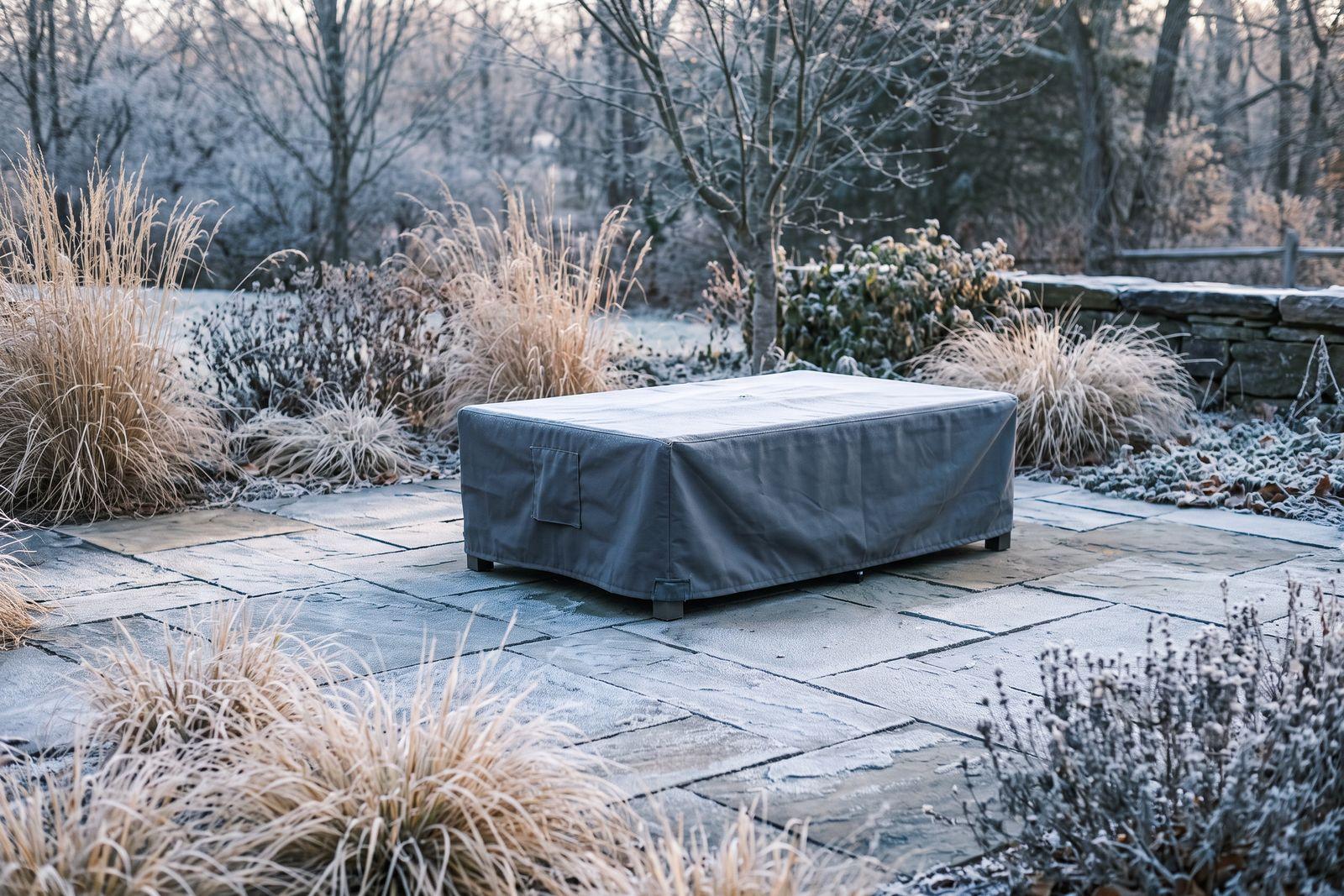
- Cool first. HPC's shutdown steps end with covering the fire pit after it has cooled. The Outdoor Plus says to give the unit ample time to cool before the cover goes on, and that its warranty does not cover heat or burn damage to the cover. Its fire pit manual also asks for the gas lines to be disconnected first, which the section on turning the gas off covers. Firegear says to install the cover after cooling off.
- Dry first. Outdoor GreatRoom says not to put the cover on when the table is wet, and to be sure the top is dry before covering for an extended period.
- Vented, with no pooling. Firegear recommends a ventilated cover, and Real Flame says not to let water pool on the cover.
- Off before lighting. Firegear says a combustible cover must come off before operation, calling it a severe safety hazard otherwise. The Outdoor Plus start-up steps say to confirm all covers are removed.
- Not a fix for popping media. Firegear says a cover can lessen thermal spalling, but heavy rain, high humidity and moisture may still make wet media pop.
HPC lists decorative copper and heavy-duty vinyl covers among its accessories, and Outdoor GreatRoom's checklist uses a burner cover under a table cover. Whatever the cover, the Prism and Outdoor GreatRoom care lists say the same thing: cover the unit when it is not in use.
Water, Frost and Concrete: What Freezing Does to GFRC
Freezing hurts concrete through the water inside it. The Federal Highway Administration's tech brief on air entrainment says ice formation is expansive and builds stress in concrete. It adds that concrete frozen while critically saturated, somewhere between 75 and 91 percent saturation, is damaged even in a single freeze-thaw cycle, whatever its air-void volume. Entrained air gives the ice room to expand, which is why mixes meant for freezing weather use it. The brief comes from FHWA's pavement program, so it serves here for the mechanism only. GFRC is a different mix.
The GFRC makers speak to the result. Prism says GFRC holds up to outdoor freeze-thaw cycles and to cover the unit when it is not in use. Outdoor GreatRoom's Supercast, a glass fiber reinforced concrete, comes with a care list: do not let dust, dirt or water stand on the top, do not cover a wet table, cover against buildup of water and snow, and make sure the top is dry before a long covering. It also recommends sealing the top annually or as needed. It calls small hairline cracks normal over time and says severe or deep cracking may need repair or replacement. Prism's Moderno guide is split: its care section recommends resealing after two years with a water-based concrete sealer, and its troubleshooting answers color fading with a coat of cement sealer every year. Ask your maker which sealer and interval apply to your piece.
Reasoning from the FHWA brief, the lever you hold is how wet the piece gets. A top with no standing water, a drained pan and a cover on a dry unit all cut the water that gets in. Whether a given piece survives a hard freeze depends on its mix, and the materials guide covers what to ask the maker.
Drain the Burner and Media Before the Freeze
A cover does not fully solve water in the pan. HPC says to confirm there is no water or debris in the burner, and to call a qualified service technician if any part has been under water. The Outdoor Plus says to keep the bowl's bottom drainage hole clear, because water in the burner pipe blocks the gas. Firegear says dust or sand in the media can plug the weep holes, and to remove the media, clear the holes and refill with clean media. Its enclosure rules call for proper drainage and ventilation so the enclosure can dry.
Outdoor GreatRoom builds its burner with raised ports and a slight pitch so rain drains to the perimeter, away from the burner and into the enclosure. Its spring checklist has the owner lift out the burner, loosen the metal flex hose at the orifice, unscrew the orifice to check the burner neck for "debris/frozen water," then retighten the orifice and check the other gas connections with two wrenches. That opens and remakes a gas connection. HPC requires an NFI-certified technician to leak check its orifice and fittings every year, Real Flame and Prism send repairs to a gas technician, and PERC says never to loosen or disconnect a propane appliance connector yourself. This guide follows that stricter majority: have a technician do the orifice step.
Wet media is the safety side of the same problem, and the makers disagree on it. HPC says that if lava rock is wet, let the fire pit burn for 45 minutes before coming within 15 feet, and The Outdoor Plus's bowl manual carries the same warning. Firegear says to light it and watch from a distance for at least 30 minutes. Real Flame and Prism say not to light the unit while the media is wet. The fire glass and lava rock guide has the full rules.
Where a Propane Cylinder Goes in Winter
Outdoors, upright, valve closed. PERC's safety booklet says never to use or store a cylinder in an enclosed area such as a basement, garage, shed or tent, and that even an empty one may hold enough propane to be hazardous. It adds that a cylinder is designed to be kept outside in any weather. PERC's lesson on storing propane says to keep small cylinders outside, not in the garage or any other indoor area, even during the winter, out of excessive heat and not beside a grill or fireplace.
The manuals add detail.
- Real Flame: upright and outdoors in a well-ventilated area, out of reach of children, never in a shed or garage, away from any source of ignition, and never in direct sunlight or where temperatures can reach 125°F. Put the dust cap on the valve outlet when the gas is not in use.
- The Outdoor Plus: a disconnected cylinder needs threaded valve plugs tightly installed and must not be stored in a building, garage or other enclosed area.
- HPC: keep the cylinder valve closed when the appliance is not in use and when the cylinder is not connected, and do not store a spare under or near an appliance.
On a table with a tank compartment, Outdoor GreatRoom's checklist and Real Flame's storage steps both take the cylinder out of the base, and Real Flame says not to store LP gas tanks in the enclosure beyond the one secured in its holder for use. The hidden tank guide covers those compartments. If you keep burning through the cold months, PERC says a container vaporizes propane more slowly when the air is colder or the liquid is low. The propane runtime guide and the propane tank runtime calculator figure hours per fill for your burner. No U.S. primary source gives cold-weather limits for small cylinders, so swap one before it is empty.
Turning the Gas Supply Off
Propane. Close the fire pit's valve, then close the cylinder valve by turning it clockwise, as PERC describes. Intertek's summary of the 2017 edition of ANSI Z21.97 says propane units on a self-contained supply carry a marking: the supply must be turned off at the cylinder when the appliance is not in use, or on a CGA No. 600 connection, the cylinder must be disconnected. The Outdoor Plus says the same sequence for propane: valve at the unit off, then the valve on the tank.
Natural gas. The Outdoor Plus says to turn the valve at the unit to OFF and then close the valve at the natural gas source. Outdoor GreatRoom says to close the gas valve on the base or shut off the gas for natural gas. HPC requires a gas shutoff outside the enclosure for emergency shutoff and maintenance, and says it is not for adjusting flame height (p. 18).
Disconnecting. Closing a valve is an owner's job. Disconnecting a fixed gas line is not. For propane systems, PERC says that if an appliance is going to be disconnected from a gas line, a qualified professional must cap or plug the open line, and that appliance connectors are for a qualified professional to disconnect. On natural gas, The Outdoor Plus says the connection must be made by a licensed contractor or the local gas company, and Firegear puts gas installation with a qualified installer, service agency or gas supplier. Read together, the "disconnected from the fuel supply" condition in the Firegear and Outdoor Plus storage rules, and The Outdoor Plus's request to disconnect the gas lines before covering, mean a visit from a licensed gas fitter on a natural gas table. A cylinder-fed unit differs. The Outdoor Plus has the owner connect the cylinder and hand tighten its QCC-1 nut, and Real Flame says to shut off the gas at the source and disconnect the hose when the fireplace is not in use.
Spring Start-Up Checks
- Uncover and look it over. Take off the cover and any burner cover, and clear leaves and debris. Spiders and insects nest in burner tubes and air mixers. Real Flame has the owner clean the burner tube, while HPC and The Outdoor Plus require a qualified service technician to inspect a propane air mixer periodically, so follow the stricter wording and have a technician check the air mixer.
- Check the cylinder and hose. Real Flame says never to use a tank with a damaged body, valve, collar or footing, and that dented or rusted tanks should be checked by your LP gas supplier. HPC and Real Flame say to inspect the hose before each use, and Real Flame says to replace a damaged one with the hose assembly it specifies.
- Run the soapy water leak test. PERC says to do it before the first use each season and each time you connect a cylinder: leak detector solution or thick soapy water on the entire valve area and the connection, then open the cylinder valve slowly and watch for bubbles. If bubbles appear, close the cylinder valve, tighten the connection and test again. If bubbles still appear, close the cylinder valve and call your propane retailer immediately.
- Reconnect the power. Put the igniter battery back, and plug the transformer back in. Outdoor GreatRoom's spring list checks the sparker connections and that the AAA battery works.
- Check the media is dry. Follow your manual's wet-media rule above.
- Light it and watch. Outdoor GreatRoom says to check the flame for irregularities and any smell of gas, and to shut off immediately if gas is smelled. HPC's danger box adds: put out any open flame, and if the odor continues, keep away from the appliance and immediately call the gas supplier or fire department. If the flame will not hold, the won't stay lit guide sorts the causes by ignition type, and gas fire pit safety covers leaks.
- Book the annual service. HPC and Firegear suggest a qualified person service the unit at least once a year, and The Outdoor Plus says to have it inspected before use and at least annually. Prism asks for a gas technician certified by the National Fireplace Institute.
Common Questions
Can you leave a gas fire pit outside in winter?
The manuals assume it stays outside, with preparation. HPC and The Outdoor Plus want it covered whenever it is not in use, Firegear recommends a ventilated cover, and Real Flame and Outdoor GreatRoom give put-away steps: gas off, cylinder out, burner and table covered. None of the manuals read here sets a minimum temperature for use.
Can you leave a fire table outside in winter?
Makers build outdoor tables to stay out under a cover. Prism says its GFRC holds up to outdoor freeze-thaw cycles, and Outdoor GreatRoom recommends covering a table that will sit unused for a long time, once the top is dry. Freezing hurts concrete that is saturated, so keep standing water off the top and the pan drained.
Should I cover my gas fire pit in winter?
Yes. HPC says a fire pit must always be covered when not in use, and The Outdoor Plus makes a cover a warranty requirement. Put it on only after the unit has cooled and the top is dry, use a ventilated cover if you can, keep water from pooling on it, and take it off before lighting.
Where do you store a propane tank for a fire pit in winter?
Outdoors, upright, with the valve closed and the dust cap on. PERC says never to store a cylinder in a basement, garage, shed or tent, and its training material says not even in winter. Real Flame adds out of direct sun and away from any ignition source. Keep a spare away from the fire pit and other appliances.
Do you need to turn off the gas to a fire pit for winter?
The manuals ask you to. HPC says to turn the gas valve off when the fire pit is not in operation, The Outdoor Plus says to turn the gas off at the source, and the listing standard's marking for propane units says to turn the supply off at the cylinder, or disconnect it, when the appliance is not in use. Capping a disconnected gas line is a job for a qualified professional.
How do I get my gas fire pit ready for spring?
Take off the cover, clear debris and nests from the burner, check the cylinder and hose, and run the soapy water leak test before the first use of the season, as PERC advises. Check the igniter battery, make sure the media is dry, light the fire pit and watch the flame, and book the annual service with a qualified technician.
Sources
- Propane Education & Research Council, Safety Guide for Propane Users (PRC-101063D, 2025): if you suspect a gas leak (printed p. 2), when to use a qualified professional (p. 5), a gas line that is disconnected (p. 9), appliance connectors (p. 10), cylinder leaks and keeping the valve closed (p. 17), storing small cylinders (p. 19), testing for leaks (p. 20)Checked
- Propane Education & Research Council, Storing Propane Fuel, Lesson 9, Unit: Propane (storing small propane cylinders outside, even during the winter; printed p. 6)Checked
- Propane Education & Research Council, The Propane Technical Pocket Guide, 4482-BR-21 v3: Vaporization Rates (printed p. 9)Checked
- Intertek, Standards Update Notice SFT-ETL-OP-29c (June 20, 2018), ANSI Z21.97 / CSA 2.41, 3rd edition dated December 1, 2017: Clause 4.20.14 marking for self-contained propane supply (PDF p. 8)Checked
- Federal Highway Administration, Tech Brief: Air Entrainment and Concrete Durability, FHWA-HIF-17-009 (November 2019): ice formation and stress (printed p. 1), entrained air and critical saturation of 75 to 91 percent (p. 2)Checked
- HPC Fire Inspired (Hearth Products Controls), Push-Button / Flame Sensing Fire Pit Insert, FPPK Series, 830-FPPK: orifice and fittings leak checked annually by an NFI certified technician (printed p. 17), gas shutoff outside the enclosure (p. 18), wet lava rock, gas valve off and cover rule (p. 21), shutdown and cover after cooling (p. 22), maintaining (p. 23), troubleshooting (p. 24), fire pit cover accessory (p. 25)Checked
- HPC Fire Inspired, Electronic Ignition Fire Pit Insert, EI Series On/Off Models, 860-EI ON/OFF: operating section (printed p. 18), shutdown and remote control warning (p. 19), maintaining (p. 20)Checked
- HPC Fire Inspired, Match Lit Fire Pit Insert, MLFPK Series, 870-MLFPK: cylinder label, keeping the cylinder valve closed and spare cylinders (printed p. 3), no spare cylinder under or near the appliance (p. 16)Checked
- The Outdoor Plus, Fire Bowl Installation Manual, Match Lit (FB-ML-M), 2026: operation, wet lava rock and cover warranty requirement (printed p. 11), start-up and maintenance (p. 12), troubleshooting and drainage (p. 13)Checked
- The Outdoor Plus, Fire Pit Manual (PDF modified 2024-09-30): natural gas shutoff valve, cylinder dust cap and natural gas connection by a licensed contractor or gas company (printed p. 8), connecting the cylinder (p. 10), turning off gas (p. 14), cleaning, covering after the gas lines are disconnected, maintenance and storage (p. 16)Checked
- Firegear Outdoors, Outdoor Fire Pit Pro H-Burners & Kits, Installation and Operating Instructions, REV. D: thermal spalling caution and covers (printed p. 3), gas installation by a qualified installer (p. 5), enclosure drainage and ventilation (p. 7), safety warnings and temporary indoor storage (p. 11), maintenance and winter months (p. 13), water in a fire pit (p. 15)Checked
- Real Flame, Forest Ridge Fire Table Owner's Manual, model C1600LP: important safety information and shutting off the gas supply when not in use (printed p. 3), set-up warnings and hose checks (p. 4), LP gas tank information and storage (p. 5), wet filler (p. 8), lighting (p. 10), care and cleaning and storage (p. 11), spider and insect warning (p. 12), cold temperatures (p. 14)Checked
- Prism Hardscapes, Moderno Series Installation Guide: safety warnings, wet media, cover and annual service (PDF p. 9), Section 4.3 Caring for Unit (PDF p. 12), color fading troubleshooting (PDF p. 14)Checked
- Prism Hardscapes, Frequently Asked Questions (GFRC holds up to outdoor freeze-thaw cycles; cleaning and care, covering the unit, annual burner inspection)Checked
- Outdoor GreatRoom Company, Frequently Asked Questions: seasonal maintenance with winter and spring checklists, Supercast concrete care and maintenance, covering the table, burner drainageChecked
- Outdoor GreatRoom Company, Prepping for Winter: Gas Fire Pit Maintenance Tips and Tricks (October 29, 2024): disconnecting the plug-in transformer on a direct spark ignition system that will not be used over the winterChecked
About the Author
James Darren Writes the Firepit HQ guides on fire features, fuel and fire codes. Every figure in them is cited to its source with the date it was checked.