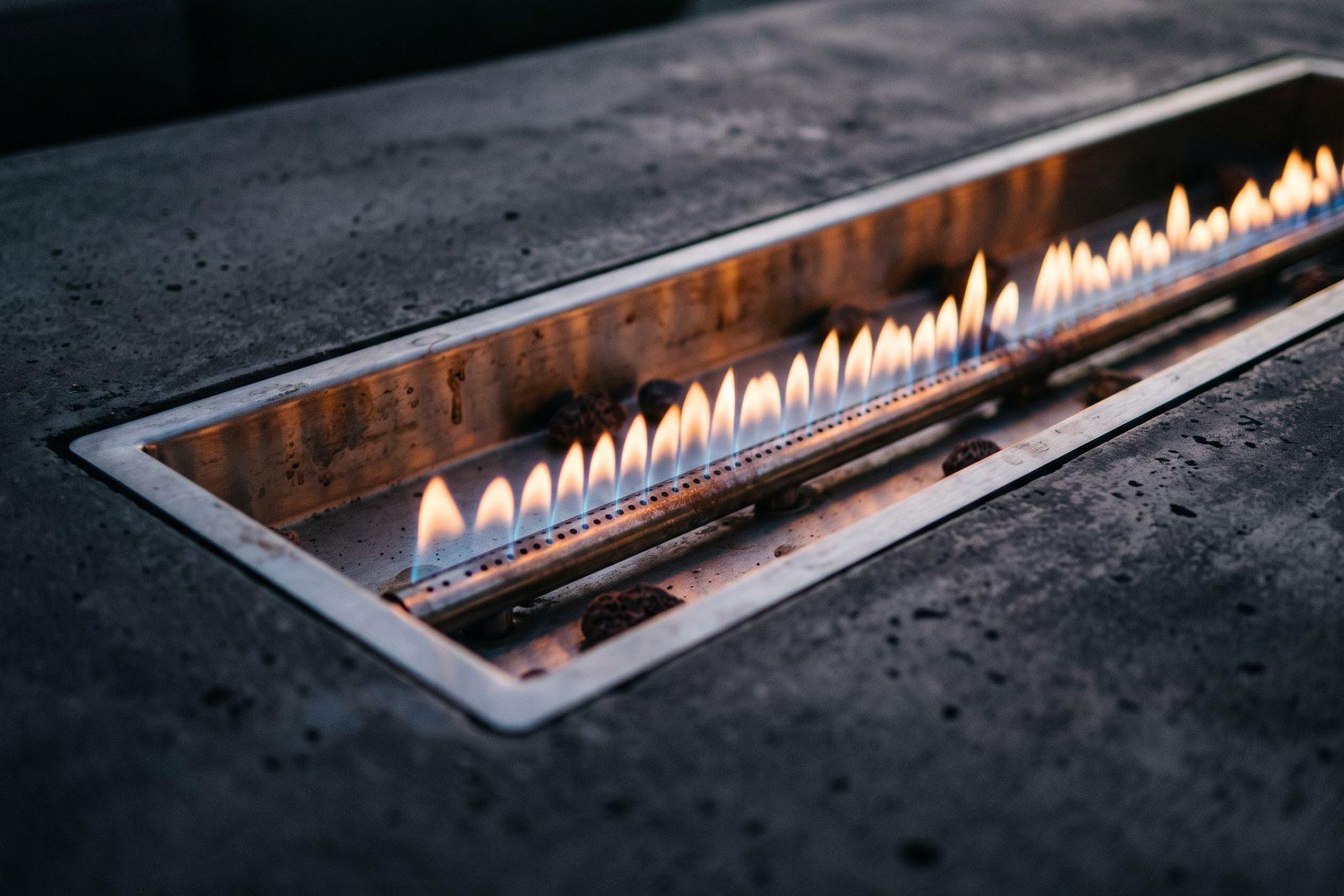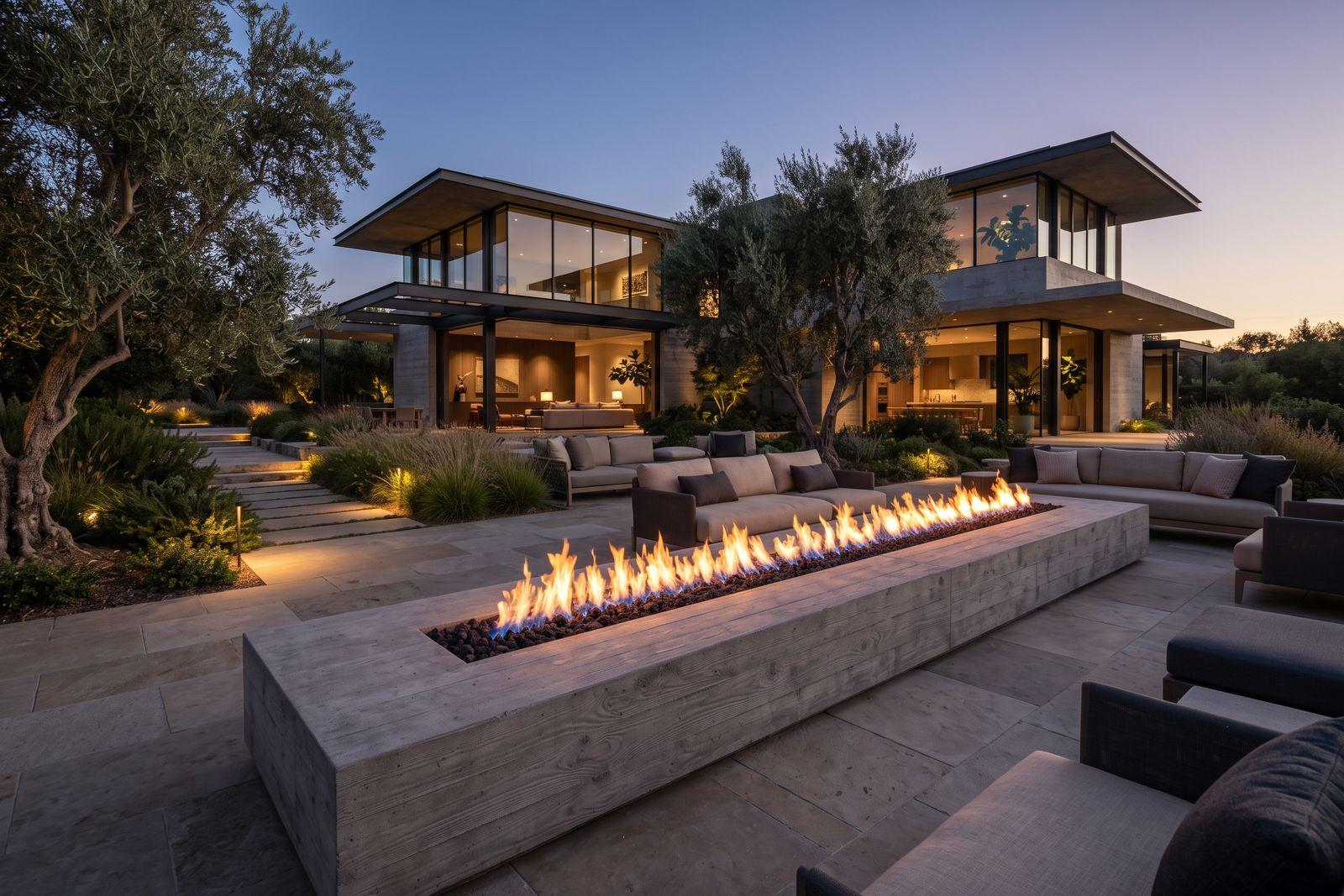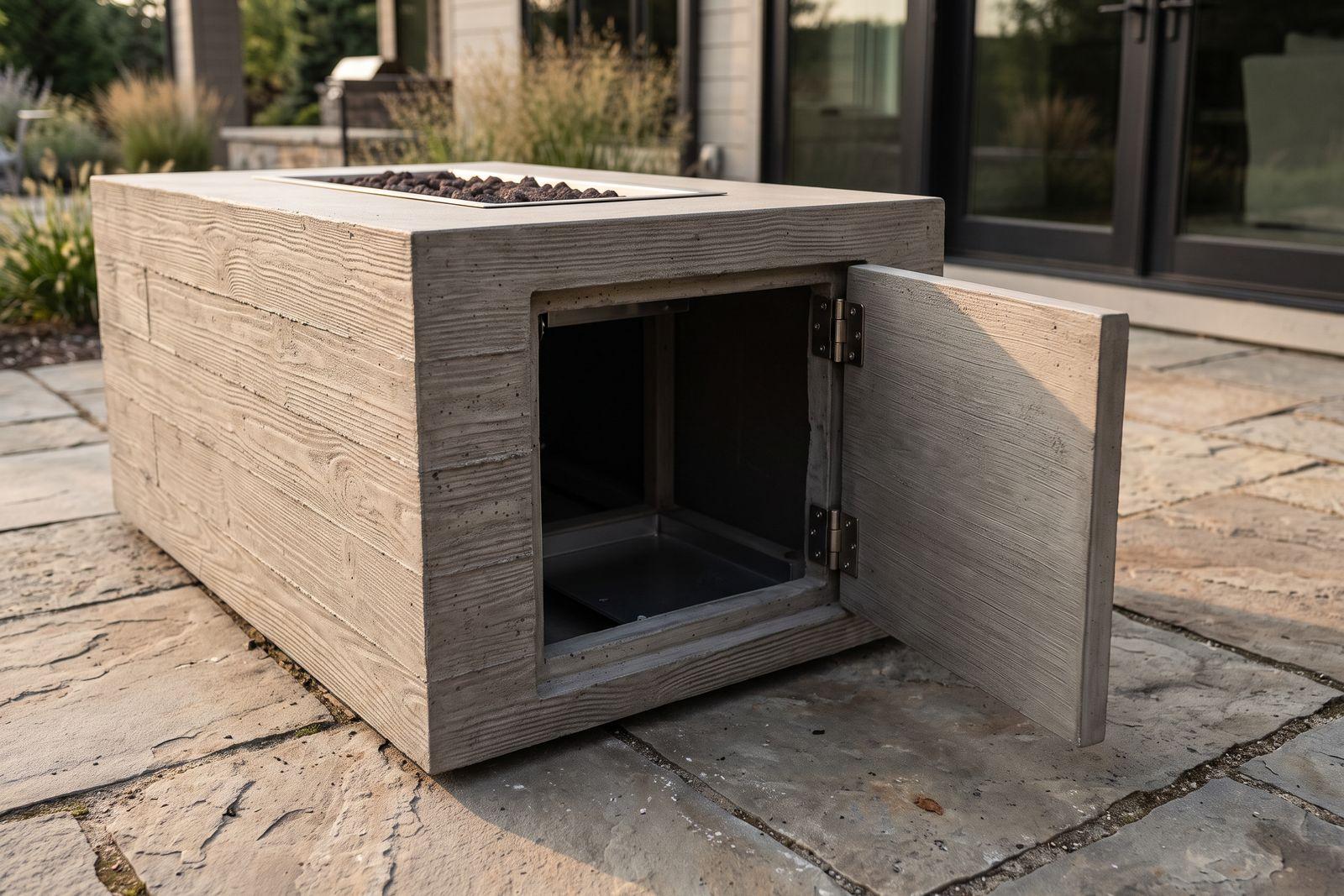

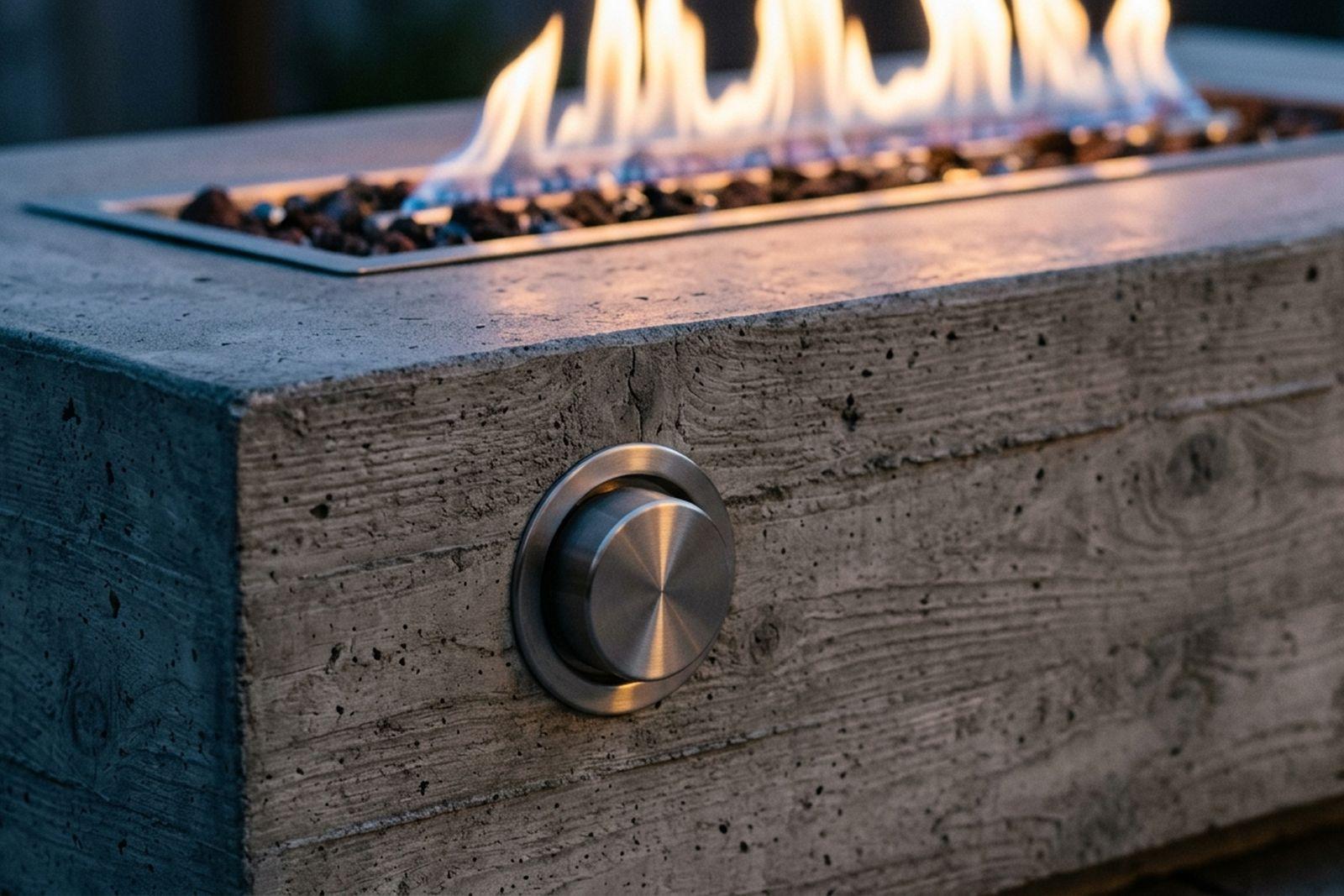
Gas fire pits are safe when the unit is listed, installed to its manual and the local code, used outdoors, kept in sight while it burns and maintained on schedule. The hazards the manuals print up front are gas leaks, carbon monoxide in an enclosed space, burns from flame and hot surfaces, and fire media that can burst when wet.
Most makers also say a fire pit is not for cooking, and none of the manuals reviewed here allows leaving one burning unattended. Everything below comes from published manuals, codes and safety agencies, each linked where it appears.
Are Gas Fire Pits Safe?
The code's test for a permanently installed unit is listing plus installation to the manual. The International Fuel Gas Code requires permanently fixed-in-place outdoor decorative appliances to be listed to ANSI Z21.97 and installed according to the manufacturer's instructions (Section 635.1). That standard covers decorative gas appliances for outdoor installation, whether portable, stationary or built in. Its 2017 edition added a rain test: the appliance has to operate safely, or shut off the gas to the main burner, in a simulated rainstorm. Check the listing label on the unit you are considering, and ask your building department which listing it accepts.
Most of the remaining risk sits in installation and use. The manuals say a qualified installer, service agency or the gas supplier should install and service the unit. The Outdoor Plus suggests installers licensed for gas piping by the local authority, and annual service by a National Fireplace Institute gas specialist. A licensed gas fitter or plumber should run the gas. The rest of this guide covers what the manuals ask owners to do.
Can You Roast Marshmallows on a Gas Fire Pit?
Most manuals say no. This table lists what each maker prints.
| Maker | What the manual or FAQ says | Where |
|---|---|---|
| HPC Fire Inspired, EI, match-lit and push-button inserts | The fire pit is not for cooking, and food material should be kept away from it | Operating section, printed pp. 18, 21 and 22 |
| The Outdoor Plus, fire bowl and insert manuals | The fire bowl and the fire pit are not for cooking | Bowl p. 11, insert PDF p. 6 |
| Firegear, Pro H-Burners | Warning box: do not use for cooking | p. 2 |
| Real Flame, Baltic table | Do not use the fireplace for cooking | p. 3 |
| Prism Hardscapes, Moderno | Not intended for cooking, and nothing should be placed on or in the fire feature | Safety warnings, PDF p. 9 |
| Outdoor GreatRoom, FAQ | Yes, but the burner is UL listed as a decorative gas appliance, not a cooking appliance, and food residue has to be cleaned off the gems and burner because it clogs the ports | FAQ |
Five of the six say the fire pit is not for cooking, and none of those five carves out marshmallows. Outdoor GreatRoom says yes with a catch. If your manual says the unit is not for cooking, I'd treat a marshmallow as cooking. If your manual is silent, ask the maker in writing.
Do Gas Fire Pits Give Off Carbon Monoxide?
They can, as any burning fuel can. The Consumer Product Safety Commission says carbon monoxide is odorless and comes from the incomplete burning of fuels that include propane and natural gas. HPC, The Outdoor Plus, Firegear and Real Flame each print a danger box saying the unit can produce carbon monoxide and must never be used in an enclosed space such as a camper, tent, car or home. Prism prints the same warning and recommends carbon monoxide detectors within reach of the appliance and in adjacent occupied spaces.
Covered areas are where the manuals differ most. Outdoor GreatRoom says enclosed structures and fully covered areas that restrict airflow are unsafe, and allows a partial enclosure with a cover and two side walls, or three side walls with at least 30% of the side wall area open. Real Flame says not to place its tables under any overhead structure or vegetation. Gas fire pits under a covered patio goes through the overhead distances.
Three more points from the documents:
- Fire media. Real Flame says filler other than its own may increase popping, cracking or carbon monoxide emissions. Use the media your maker names.
- Soot. The Propane Education & Research Council lists soot buildup on propane equipment as a possible sign the gas isn't burning completely, and a reason to call a qualified professional.
- Alarms. The CPSC says a carbon monoxide alarm is added protection and no substitute for proper use and upkeep of the appliance.
Firegear's manual carries a California Proposition 65 notice that fuels and the products of combustion contain chemicals known to cause cancer, birth defects or other reproductive harm, and Prism's carries one for chromium. None of the manuals gives an exposure figure.
Why Does My Gas Fire Pit Smell Like Gas?
Natural gas has no odor in its natural state, according to Real Flame's manual, and suppliers add an odorant to it and to propane. The federal pipeline safety agency says gas distribution systems are odorized with mercaptan, which smells like skunk. The propane industry's council says a unique odor is added to propane and that a bad smell of unknown source may be a gas leak. Treat a smell near a fire pit as a possible leak.
What the manuals say to do:
- Shut off the gas to the appliance and put out any open flame. HPC prints this in its danger box.
- Leave the area if the odor continues, then call the gas supplier or fire department. The propane council adds no flames or sparks, calling from a safe place away from the leak, and staying away until a propane retailer, emergency responder or qualified technician says it is safe.
- Wait after a failed light. If the burner won't light, close the valve and wait at least 5 minutes before trying again. The Outdoor Plus says this when you smell gas, and Real Flame says it when a table doesn't ignite within 15 seconds.
Gas can be there without a smell you notice. The council lists colds, odor fatigue and odor loss, and recommends propane gas detectors. Propane is heavier than air and may settle in low places, according to HPC's cylinder label. Real Flame says natural gas is lighter than air and collects in high areas. HPC says a built enclosure needs at least two vents so heat and residual fuel can escape.
A smell can also mean gas is backing up. Spiders and insects nest in burner tubes and air mixers. Real Flame warns that a blocked tube can cause a flashback, a fire in the burner tube or under the unit, and The Outdoor Plus warns that a blocked air mixer on a propane unit can let fuel fill the cavity. Both say to inspect and clean the burner on a schedule.
How Do You Check a Gas Fire Pit for Leaks?
The manuals describe a soapy water test.
- Real Flame: mix 1 part dish soap with 3 parts water in a spray bottle. With the control knob off and the gas on, spray the valve connections. If no bubbles appear after 1 minute, wipe the solution away.
- HPC: apply soapy water to the connections marked on the cylinder label and open the cylinder valve. If a bubble appears, close the valve and have an LP-gas service person repair it. Never check with a match or open flame.
- Prism: turn off the key valve, leave the gas source open and check hoses and fittings for bubbles. If there is a leak, turn the gas off and contact the factory.
The intervals differ. Firegear requires soapy water leak detection before regular use. HPC calls for a leak test every year and whenever a cylinder is hooked up or a part is replaced. Prism says to check hoses and fittings at least once a month, and Real Flame says to inspect the hose before each use. Follow your own manual. Leak testing of the gas piping at installation belongs to the qualified installer, as The Outdoor Plus puts it.
What Do Thermocouples and Flame Sensors Do?
A flame-sensing system decides what the gas does when the flame goes out. The manuals describe three levels.
- Flame-sensing pilot. Real Flame's troubleshooting steps for a table that lights but won't stay lit check the igniter housing and the thermocouple, which has to sit where the flame touches its tip. You hold the control knob in for 15 to 30 seconds after ignition. HPC's push-button inserts say the thermocouple needs time to heat, so hold the knob for 30 seconds after the pilot lights.
- Electronic ignition. In HPC's EI series the main valve opens only once the thermocouple is hot. If the thermocouple isn't hot in 60 seconds, the system shuts down. If the pilot blows out, it shuts down and restarts on its own, and after 15 failed attempts it locks out. It also closes the gas valve if the valve box passes 190°F.
- Manual valve. A match-lit unit is lit by hand and shut by hand. Our guide to match-lit and electronic ignition covers what each type does when the flame goes out.
Wherever the shutoff is, everyone who uses the fire pit should know it. The Outdoor Plus and HPC both require a gas shutoff on the outside of the enclosure for emergency use.
Is It Okay to Leave a Gas Fire Pit Burning Overnight?
No manual reviewed here allows it. The Outdoor Plus, Real Flame, Firegear and HPC each say never to leave an operating fire pit unattended. HPC adds not to leave it with someone unfamiliar with its emergency shutoff. The model fire code requires constant attendance for recreational fires and portable outdoor fireplaces (IFC 307.5), categories whose definitions don't mention gas, and the manuals ask the same of a gas unit.
Timers are backups. Firegear lists an E-STOP valve with a one-hour mechanical timer as an accessory, and HPC's EI manual lists an automatic shutoff timer as a control option. Both manuals still say not to leave a lit unit alone.
When you finish, close the gas valve. HPC says to turn the gas valve off whenever the fire pit isn't operating. Intertek's summary of the 2017 edition of the listing standard shows a required marking for self-contained propane units: turn the supply off at the cylinder, or disconnect the cylinder, when the appliance isn't in use. How long a cylinder lasts is a separate calculation, and the propane tank runtime calculator does it for your burner's rating.
Children, Pets, Wind and Wet Media
- Children and pets. The Outdoor Plus says its fire bowl is not suitable for children, that only adults who understand the operation and precautions should handle it, and that children and pets stay away at all times. Prism says not to leave pets or children unattended around it. Surfaces stay hot after the flame is off. Prism says cooling can take 30 minutes to an hour depending on size.
- Alcohol and drugs. Real Flame says alcohol and prescription or non-prescription drugs may impair your ability to operate the fireplace safely.
- Wind. Prism and Real Flame say not to use the unit in windy conditions. HPC says gusts affect the flame unpredictably and to turn the fire pit off if conditions aren't safe.
- Wet media. Lava rock and glass can crack or burst when wet. The makers disagree on the fix. Real Flame and Prism say not to light wet media. HPC and The Outdoor Plus say to let the fire pit burn 45 minutes and stay 15 ft away. Firegear says to watch from a distance for at least 30 minutes in damp weather. HPC and The Outdoor Plus rule out gravel and river rock, which hold moisture and can fracture, and Firegear says not to use stone or river rock.
- Flammables. Keep clothing, gasoline and anything combustible away from the unit. HPC, The Outdoor Plus and Real Flame all say so.
Can You Leave a Gas Fire Pit Outside in Winter?
The manuals assume the unit stays outside, and all five makers below want it covered when it isn't in use.
- HPC: the fire pit must always be covered when not in use.
- The Outdoor Plus: covering the fire bowl when not in use is a warranty requirement.
- Firegear: a ventilated cover is recommended, installed after the unit cools. Remove a combustible cover before lighting.
- Real Flame: cover the fireplace when not in use and don't let water pool on the cover.
- Outdoor GreatRoom: covering isn't mandatory but is recommended for extended periods, and a winter checklist lists clearing debris, closing the gas valve or shutting off natural gas, removing the propane cylinder from the base, covering the burner and covering the table. It says not to put the cover on a wet table, and to avoid using the fire pit in the rain.
HPC's cylinder label says not to use or store a cylinder in a building, garage or enclosed area. In spring, repeat the leak test and inspect the burner for nests before the first fire. Firegear says a qualified service person should inspect and clean the fire pit at least once a year.
Safety Checklist
Before each fire:
- Look over the hose and connections, clear debris and nests from the burner, and move anything flammable away.
- Check that the media is dry and that the wind is calm.
- Confirm the shutoff location with everyone using the fire pit.
- Keep children and pets away, and stay with the fire while it is lit.
Each season and each year:
- Run the soapy water test described above, on the schedule your manual sets.
- Have a qualified service person inspect and clean the unit at least once a year, and ask whether your unit's distances to walls and overhead structures still hold, using the clearance distance checker and your manual.
- Read how far a gas fire pit should be from the house for burn bans and local rules, and gas fire pits on decks if the unit sits on one.
Common Questions
Can you roast marshmallows on a gas fire pit?
Most manuals say no. HPC, The Outdoor Plus, Firegear, Real Flame and Prism all say the fire pit is not for cooking, and Prism adds that nothing should be placed on or in it. Outdoor GreatRoom says yes, but its burner is listed as a decorative gas appliance and food residue must be cleaned off the burner because it clogs the ports. Check your own manual.
Does a propane or natural gas fire pit give off carbon monoxide?
It can. The Consumer Product Safety Commission says carbon monoxide comes from the incomplete burning of fuels including propane and natural gas. HPC, The Outdoor Plus, Firegear and Real Flame print danger warnings that their units can produce carbon monoxide, which has no odor, and must never be used in an enclosed space. Covered areas that restrict airflow are where the manuals differ most.
Why does my gas fire pit smell like gas?
Suppliers add an odorant so a leak can be smelled, so treat the smell as a leak. HPC's manual says to shut off the gas to the appliance, extinguish any open flame, and leave the area if the odor continues, then call the gas supplier or fire department. Insects can also block a burner tube and make gas back up, which Real Flame and The Outdoor Plus warn about.
How do you check a gas fire pit for leaks?
The manuals describe a soapy water test. Real Flame has you mix 1 part dish soap with 3 parts water, spray the valve connections with the gas on and the control knob off, and watch for bubbles for a minute. Bubbles mean a leak. HPC says to close the valve and call an LP-gas service person, and Prism says to turn the gas off and contact the factory. Never test with a match or flame.
Is it okay to leave a gas fire pit burning overnight?
No manual reviewed here allows it. The Outdoor Plus, Real Flame, Firegear and HPC all say never to leave an operating fire pit unattended. Timers exist as accessories, and HPC and Firegear still tell owners to stay with a lit unit. When you finish, turn off the gas valve, and at the cylinder if the unit runs on a self-contained propane supply.
Can you leave a gas fire pit outside in winter?
The manuals assume it stays outside, with preparation. HPC says the fire pit must always be covered when not in use. Outdoor GreatRoom's winter steps are to clear debris, shut the gas valve or the natural gas supply, remove the propane cylinder from the base, cover the burner and cover the table. Cool the unit first, and remove a combustible cover before lighting.
Sources
- International Code Council, 2024 International Fuel Gas Code, Chapter 6, Section 635.1 Outdoor Decorative AppliancesChecked
- CSA Group, ANSI Z21.97-2017 (R2022) / CSA 2.41-2017 (R2022), Outdoor decorative gas appliances, published Preface/Scope, Clause 1.1 (portable, stationary or built-in appliances for outdoor installation)Checked
- Intertek, Standards Update Notice SFT-ETL-OP-29c (June 20, 2018), ANSI Z21.97 / CSA 2.41, 3rd edition dated December 1, 2017: Clause 4.20.14 (cylinder marking) and Clause 5.16 (rain test), PDF pp. 8 and 9Checked
- International Code Council, 2024 International Fire Code, Version 2.1, Chapter 3, Section 307.5 AttendanceChecked
- U.S. Consumer Product Safety Commission, Carbon Monoxide Fact Sheet (what carbon monoxide is, how to prevent poisoning, CO alarms)Checked
- U.S. Department of Transportation, Pipeline and Hazardous Materials Safety Administration, Pipeline Leak Recognition and What to Do (mercaptan odorant in gas distribution systems)Checked
- Propane Education & Research Council, What To Do If You Smell GasChecked
- Propane Education & Research Council, Important Propane Safety Information (propane odor, why a leak may go unsmelled, propane gas detectors, soot, qualified professionals)Checked
- HPC Fire Inspired (Hearth Products Controls), EI Series Electronic Ignition Fire Pit Insert, On/Off Models, 860-EI ON/OFF: danger boxes (printed p. 1), control options (p. 5), venting and overheating shutoff at 190°F (p. 12), operating section and sequence of operation (pp. 18 and 19)Checked
- HPC Fire Inspired, Match Lit Fire Pit Insert, MLFPK Series, 870-MLFPK: propane cylinder label with soapy water test (printed p. 3), consumer safety information (p. 7), annual leak test (p. 17), gas shutoff (p. 19), operating section (pp. 22 and 23)Checked
- HPC Fire Inspired, Push-Button / Flame Sensing Fire Pit Insert, FPPK Series, 830-FPPK: operating section (printed p. 21) and troubleshooting, thermocouple warm-up (p. 24)Checked
- The Outdoor Plus, Fire Bowl Installation Manual, Match Lit (FB-ML-M), 2026: danger boxes and warnings (printed pp. 2 and 3), location (p. 5), operation (p. 11), start-up and maintenance (p. 12), troubleshooting (p. 13)Checked
- The Outdoor Plus, Match Lit Fire Pit Insert Manual (2024), Selecting the Location (PDF p. 3) and Fire Pit Operation (PDF p. 6)Checked
- Firegear Outdoors, Outdoor Fire Pit Pro H-Burners & Kits, Installation and Operating Instructions, REV. D: warnings and Proposition 65 notice (printed pp. 2 and 3), enclosure requirements (p. 7), operation and lighting (p. 11), maintenance (p. 13), E-STOP accessory (PDF p. 15)Checked
- Real Flame, Baltic Rectangle Fire Table 9750NG Owner's Manual (2021): general and in-use warnings (printed pp. 3 and 4), natural gas characteristics (p. 5), filler warning (p. 7), leak check (p. 10), lighting (p. 11), storage (p. 12), spider and insect warning (p. 13), thermocouple troubleshooting (pp. 14 and 15)Checked
- Prism Hardscapes, Moderno Series Installation Guide: safety warnings (PDF p. 9), adjustment and cool-down (PDF p. 12) and troubleshooting, unwanted odors (PDF p. 14)Checked
- Outdoor GreatRoom Company, Frequently Asked Questions: roasting marshmallows, enclosed spaces and partial enclosures (Q1 to Q3), seasonal maintenance and winter checklist, covering, rainChecked
About the Author
James Darren Writes the Firepit HQ guides on fire features, fuel and fire codes. Every figure in them is cited to its source with the date it was checked.