

Wood Burning Fire Pits
A wood burning fire pit needs no gas line, tank or ignition, and the rules that govern it differ from the rules for gas. The decisions below each point to the guide that covers them.
Our online store opens in 2027. Nothing on this page is for sale yet, and we claim no dealer relationship with any manufacturer. Until then, this page explains the category so you can choose well wherever you buy.
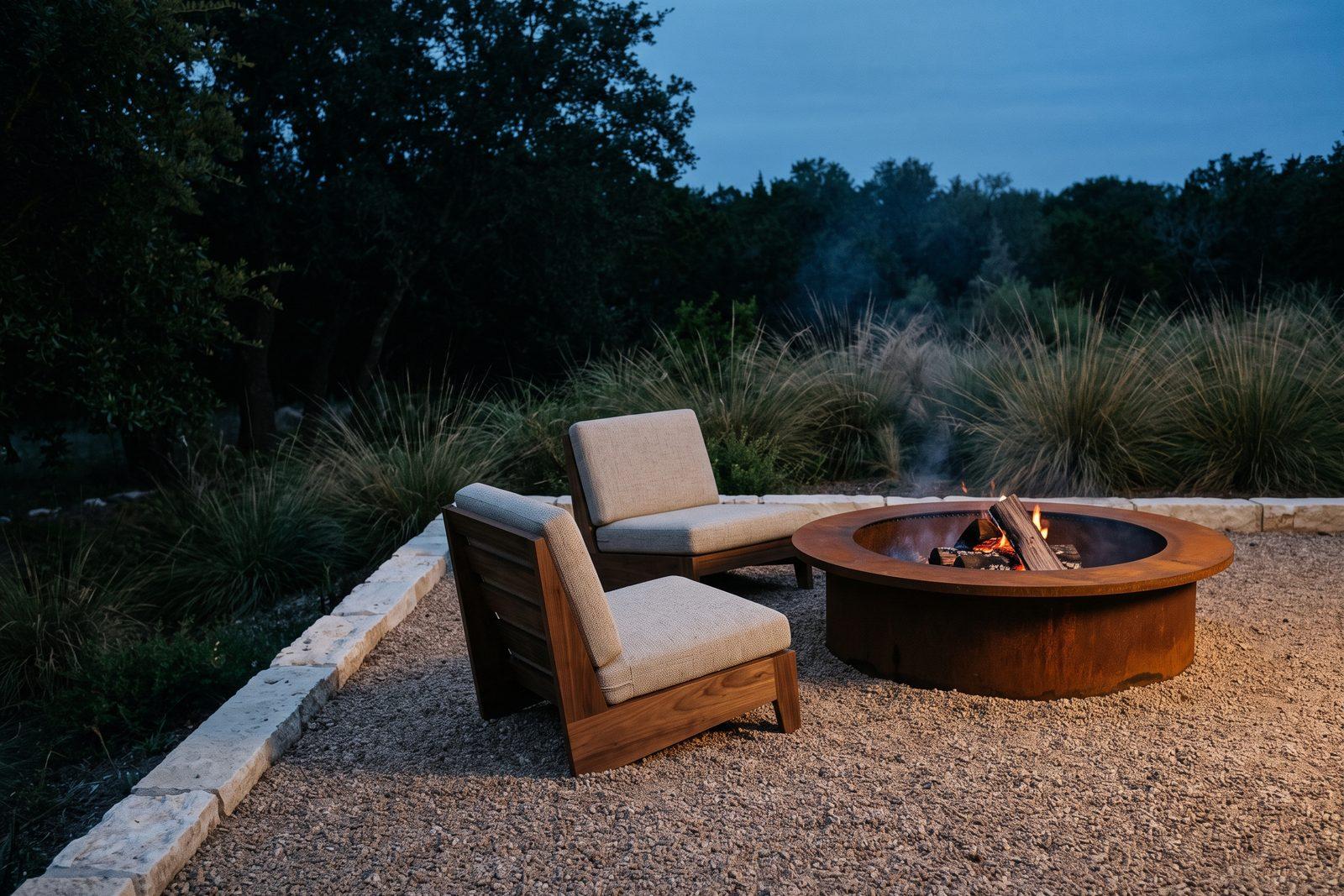
What to Know Before You Buy
Five decisions shape a wood burning fire pit.
- Wood or gas. A gas fire feature is no place for wood: Prism, The Outdoor Plus, HPC and Firegear all say not to burn solid fuel in their gas fire features. Gas vs wood fire pit compares heat, cleanup and local burn rules.
- Size. Ohio Flame's pits run 24 to 48 inches across, and the pit needs room for seats and for the distance the code asks. See how big a fire pit should be.
- Steel and finish. Raw steel develops a patina and can mark light paving. The materials guide covers weathering, staining and care.
- Distance and burn rules. Wood fire rules differ by state, city and air district. The guide on how far a fire pit should be from the house covers distance, burn bans and permits.
- Wood only or convertible. Ohio Flame says its pits are for wood only. A converted pit needs a non-combustible, vented, above-grade enclosure and a gas line that a licensed gas fitter sizes and tests, and the burner kit guide lists the conditions.
Sizes, Output and Fuel
Wood pit makers publish size and weight. Ohio Flame's Patriot page lists diameters from 24 to 48 inches and weights from 46 to 255 pounds, and it gives no heat figure. The fuel is firewood, so there is no burner rating, gas line or ignition to compare.
| Line | Sizes | Notes |
|---|---|---|
| Ohio Flame Patriot | 24, 30, 36, 42 and 48 in. | Carbon steel in a natural finish, 3/16 in. thick at 24 to 36 in. and 1/4 in. at 42 and 48 in. |
| Ohio Flame Liberty | 24, 30, 36, 42 and 48 in. | Five base styles and a rain drain that closes with a blocking plate; the 24 in. weighs 47 lb |
| Ohio Flame Artisan | Stellar in 30, 37 and 41 in. | Cut-steel bowls with a patina finish |
| Ohio Flame Heavy Gauge Fire Ring | 24, 30, 36 and 42 in. | 3/16 in. steel, 12 in. high, for an in-ground pit or a masonry liner |
| Prism Falo | Falo 21 and Falo 33 | About 30 lb and 40 lb, with a glass fiber reinforced concrete shell and a steel pan |
| Firegear LUME insert | Fits pits of 29, 34 and 36 in. | Stainless smokeless insert for block, brick or other non-combustible pits |
A smokeless pit still burns wood. USDA Forest Service lab tests of two smokeless pits and a campground pit averaged 2.2 grams of fine particulate per kilogram of firewood, about 80 percent below the 11.3 grams EPA's national inventory uses for traditional pits. The three pits emitted about the same. The burn rules in the last section regulate by fuel, so a low-smoke pit gets no exemption.
Who Makes Them
These makers' own documents show they build wood-burning pits or inserts for them. The order is not a ranking.
Ohio Flame, of Columbiana, Ohio, makes wood-burning steel pits, bowls and rings. Every product on its site burns wood, and its Gas Burners collection was marked coming soon, with no products, on 2026-10-08. Its lifetime warranty on registered steel fire bowls covers structural integrity and welds, and it excludes screens, grates, paint and finishes.
Prism Hardscapes, of Cerritos, California, makes the Falo 21 and Falo 33, portable wood-burning bowls with a glass fiber reinforced concrete shell and a high-heat powder-coated steel pan.
Firegear, of Huntington, Indiana, makes the LUME, a stainless insert that it describes as turning an ordinary wood-burning fire pit into a cleaner-burning one. It is the one wood product in its line.
Rules and Placement
The model fire code treats a wood fire as a recreational fire, kept 25 feet from a structure or combustible material, or as a portable outdoor fireplace, kept 15 feet away, with an exception for one- and two-family dwellings. A wood fire must be attended until it is out. Whether a steel fire bowl counts as one or the other is a question for your fire official.
The state pages in the fire code library show how that plays out. Arizona, California, Nevada, Oregon and Utah each list 25 feet for a wood fire to a structure, California's where a city or county adopts the fire code section. Washington's state outdoor burning rule sets 50 feet, above the 25 foot fire code minimum. Colorado sets the distance locally.
Air rules add a second layer. The South Coast Air Quality Management District's Rule 445 bars operating a wood-burning device, burn bowls included, on a declared No-Burn day, and Denver treats open burning, including wood fire pits, as unlawful without a written permit from its Department of Public Health and Environment.
For placement, Ohio Flame recommends flagstone or pavers, because ash falls from the rain drain and the steel can transfer rust to lighter paving, and it says not to place its pits on wooden decks. Let ashes cool, then keep them in a covered metal container at least 10 feet from the home, never in a trash can. The U.S. Fire Administration advises a metal screen over a wood-burning fire. The clearance checker gives the International Fire Code distance for a wood fire, and your fire department and air district have the last word.
Guides for This Category
- Gas vs Wood Fire Pit: Heat, Cleanup and Burn RulesGas vs wood fire pit: gas leaves no ash or wood smoke and may run when wood is restricted, wood gives a real log fire. Heat, cleanup and burn rules compared.
- How Far Should a Gas Fire Pit Be From the House?How far should a gas fire pit be from the house? Manuals say 24 to 48 inches at the sides and 72 to 120 overhead. Wood-fire rules, burn bans and permits differ.
- How Big Should a Fire Pit Be? Sizes, Seating and HeightHow big should a fire pit be? Gas bowls run 24 to 70 inches across and tables to 110. Size by the manual's clearance, seats 36 to 42 inches back and your patio.
- Fire Pit Materials: GFRC vs Corten vs Copper vs SteelWeight, patina, staining, care, heat and water damage for GFRC, corten, copper, carbon steel and stainless, from manufacturer documents and material standards.
- Fire Pit Burner Kits, Drop-In Pans and Inserts ExplainedA fire pit burner kit is a burner, valve and flex line; an insert adds the pan. Burner shapes, pan fit, vents, ignition, listings and wood-to-gas limits.
Related Calculators
Common Questions
How far should a wood burning fire pit be from the house?
The model fire code keeps a recreational fire 25 feet from a structure or combustible material and a portable outdoor fireplace 15 feet away, with an exception for one- and two-family dwellings. Arizona, California (where adopted locally), Nevada, Oregon and Utah list 25 feet, and Washington's state outdoor burning rule sets 50 feet. Your fire official decides which category a steel bowl falls under.
Can you put a wood burning fire pit on a deck?
Ohio Flame says not to put its fire pits on wooden decks and recommends flagstone or pavers, because ash falls from the rain drain and the steel can transfer rust to lighter paving. Its natural steel finish develops a patina and darkens over time. Read the manual for any pit you choose, and check your local rules before you place it.
What size wood burning fire pit do I need?
Ohio Flame's Patriot and Liberty pits come in 24, 30, 36, 42 and 48 inches across, and its Heavy Gauge Fire Ring in 24 to 42. Weights run from 46 to 255 pounds on the Patriot page, and a 24 inch Liberty weighs 47. Pick the size from your patio, since the pit needs room for seats and for the distance the fire code asks, which is 25 feet from a structure for a recreational fire.
Can you use a wood burning fire pit on a no-burn day?
Not where the rule covers wood. The South Coast Air Quality Management District's Rule 445 bars operating a wood-burning device, burn bowls included, on a declared No-Burn day, and Denver treats open burning, including wood fire pits, as unlawful without a written permit. Other cities and air districts have their own wood rules, so ask yours before you light one.
Can you convert a wood burning fire pit to gas?
Ohio Flame says its pits are for wood only and makes no conversion kits. Converting a pit needs a non-combustible, vented, above-grade enclosure, a pan and burner sized to it, and a gas line that a licensed gas fitter sizes and tests. The burner kit guide lists what to check first.
Sources
- International Code Council, 2024 International Fire Code, Chapter 3: Section 307.4.2 (recreational fires, 25 feet), Section 307.4.3 (portable outdoor fireplaces, 15 feet, exception for one- and two-family dwellings), Section 307.5 (attendance)Checked
- A.A.C. R4-36-201; 2024 IFC §307.4.2Checked
- 2025 California Fire Code §307.4.2Checked
- 2024 IFC §307.4.2, adopted at NAC 477.281 as amended by R205-24 and by Clark County, Las Vegas, Washoe County and Reno, none of which amends itChecked
- 2025 Oregon Fire Code §307.4.2, adopted at OAR 837-040-0010Checked
- Utah Code §15A-5-103 and §15A-5-202.5 (Section 307 not amended); 2024 IFC §307.4.2Checked
- WAC 173-425-020(2)(i) and 173-425-050(6)(b) (Department of Ecology); WAC 51-54A-0307 (2021 IFC §307.4.2)Checked
- City and County of Denver, Department of Public Health and Environment, Air Quality page: open burning and solid fuel fire pits, high-pollution daysChecked
- South Coast Air Quality Management District, Rule 445 Wood-Burning Devices (amended September 5, 2025): definitions (c)(13), (c)(19), (c)(22), subdivision (e) No-Burn daysChecked
- U.S. Fire Administration, Pictograph: Discard Ashes Safely (last reviewed October 20, 2021)Checked
- U.S. Fire Administration, Outdoor Fire Safety (metal screen over wood-burning fires)Checked
- USDA Forest Service, Missoula Fire Sciences Laboratory, Measuring the smoke from smokeless recreational fire pits (December 4, 2025)Checked
- USDA Forest Service, Rocky Mountain Research Station, Urbanski et al., Pollutant emission factors for outdoor recreational fire pits, General Technical Report RMRS-GTR-449 (2025), abstractChecked
- Ohio Flame, Patriot Fire Pit product page (sizes, weights, steel thickness, finish, rain drain and blocking plate)Checked
- Ohio Flame, Patriot Fire Pit product pageChecked
- Ohio Flame, Liberty Fire Pits collectionChecked
- Ohio Flame, Artisan CollectionChecked
- Ohio Flame, Heavy Gauge Fire Ring product pageChecked
- Ohio Flame, Gas Burners collectionChecked
- Ohio Flame, Lifetime Warranty pageChecked
- Ohio Flame, Media page; The Rust Belt pageChecked
- Ohio Flame, FAQ (patina; placing the fire pit on flagstone or pavers; rust transfer on lighter hardscapes; wooden decks)Checked
- Ohio Flame, Frequently Asked Questions: wood-burning only, no conversion kits, licensed professional for modificationsChecked
- Prism Hardscapes, Wood Burning Collection pageChecked
- Prism Hardscapes, Company page (headquarters and showroom)Checked
- Firegear Outdoors, LUME Insert pageChecked
- Firegear Outdoors, Contact pageChecked
- Prism Hardscapes, Porto Series Installation, Operation, & Maintenance Manual: Section 2 (propane or natural gas only, no solid fuels; wet media; monthly hose check; annual service), Section 3.1 (clearances), Section 4.1.1 (manual light with a fireplace lighter and key), Section 6 (warranty and wood use)Checked
- The Outdoor Plus, Fire Pit Manual (PDF modified 2024-09-30): Operating the Fire Pit (no solid fuel), Cleaning, Maintenance and Storage (annual cleaning and inspection), Set-Up Step 1 and Clearance from CombustiblesChecked
- HPC Fire Inspired (Hearth Products Controls Co.), MLFPK Series Match Lit Fire Pit Insert, Installation & Operation Instructions, 870-MLFPK: Section 8 Adding Approved Media (solid fuels shall not be burned in the fire pit) and Section 10 Maintaining the Fire Pit (annual service by an NFI Gas Specialist suggested)Checked
- Firegear Outdoors, Outdoor Fire Pit Pro H-Burners & Kits, Installation and Operating Instructions, REV. D: cover page input ratings and warnings (do not burn any solid fuels in this appliance)Checked
- HPC Fire Inspired, Burner Kits and Match Lit Kits manual 800-FP/FPS (5/21): enclosure requirements (PDF pp. 10 to 11), installation (PDF pp. 12 to 13), media (PDF pp. 14 to 15), licensed installer (PDF p. 4), no listing markChecked
- The Outdoor Plus, Match Lit Fire Pit Insert Manual (2024): licensed installer and supply pressures (PDF pp. 1 to 2), enclosure, vents and pan recess (PDF p. 3), no solid fuels (PDF p. 1)Checked
Hear When the Store Opens
We'll email you when the store opens in 2027.