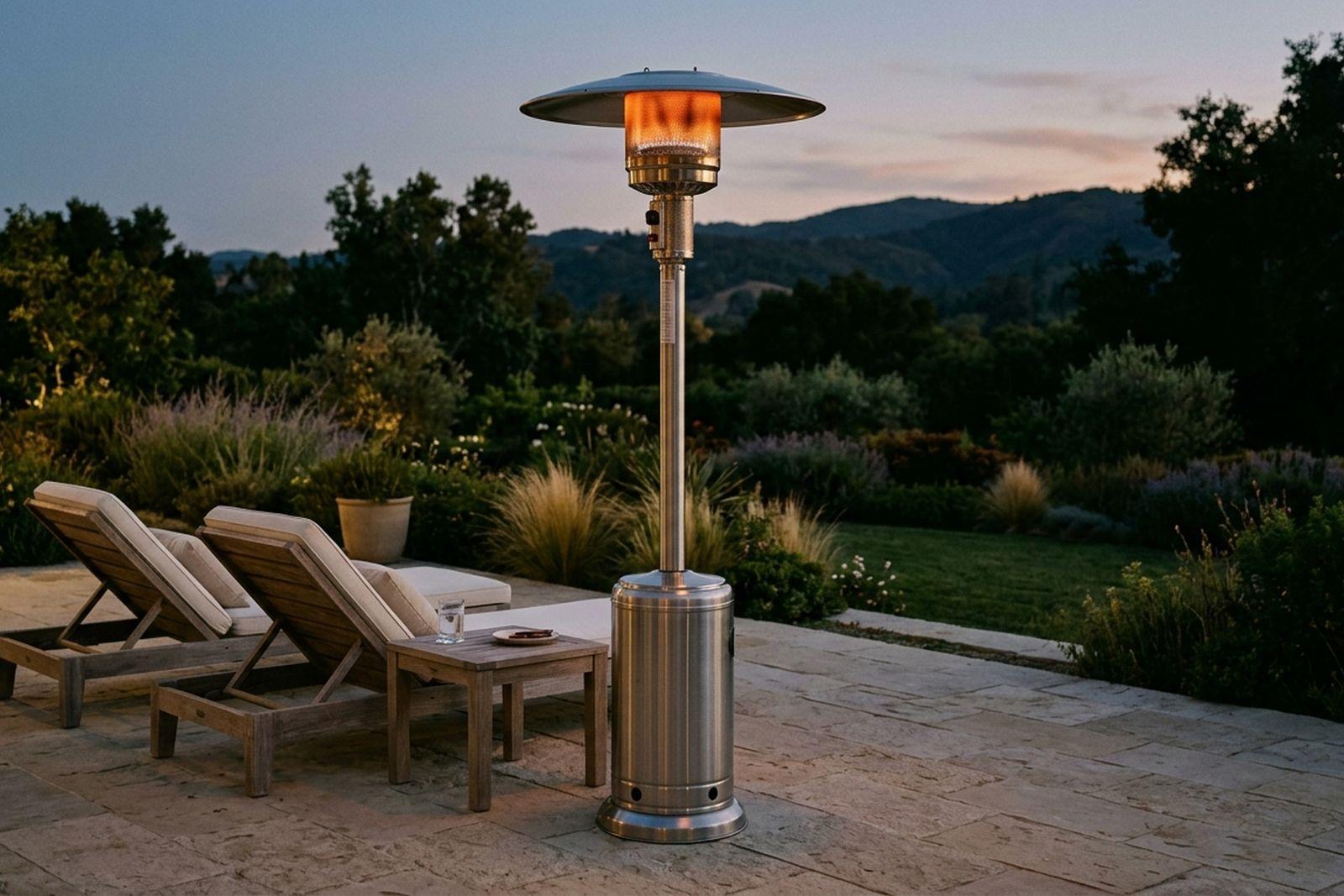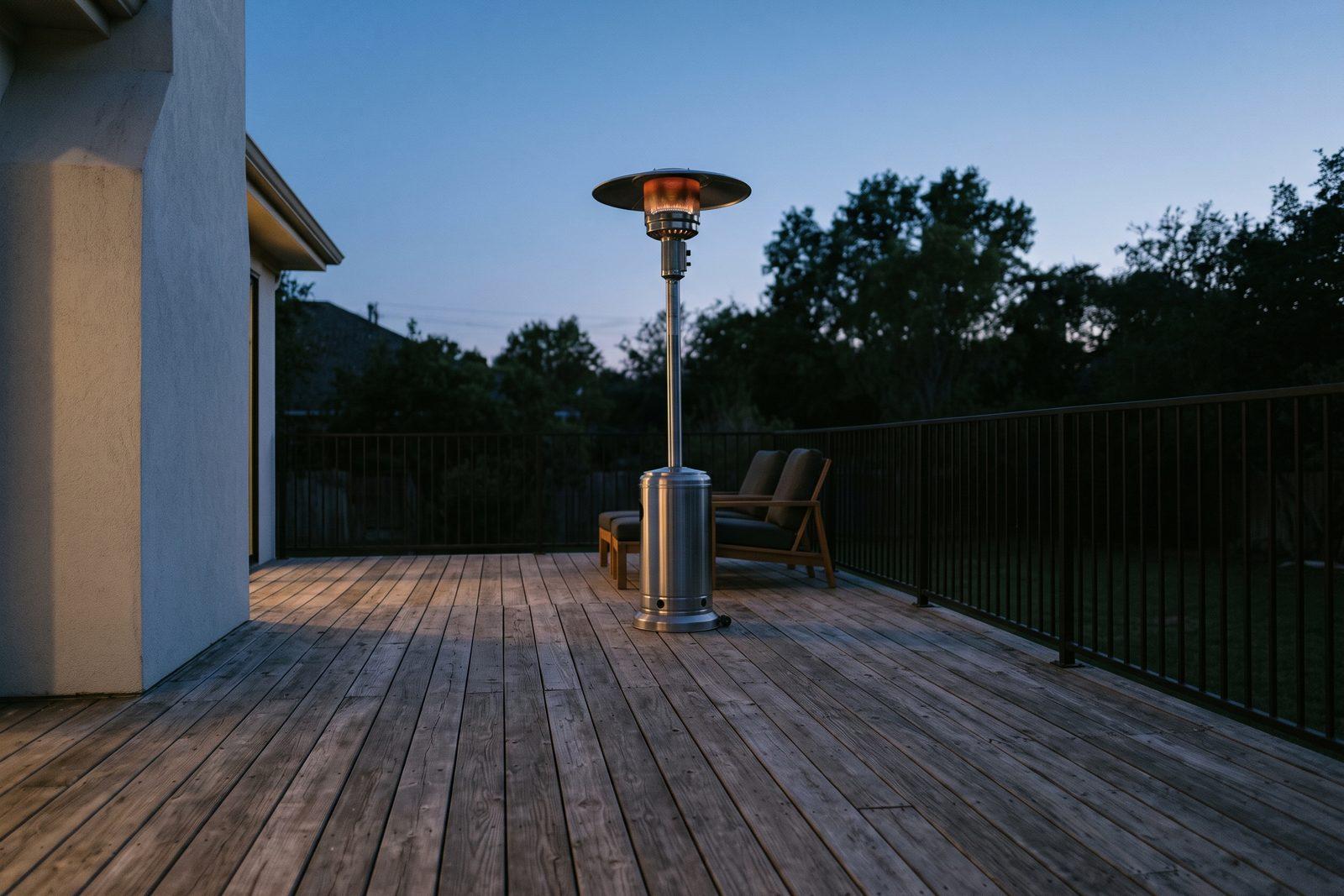

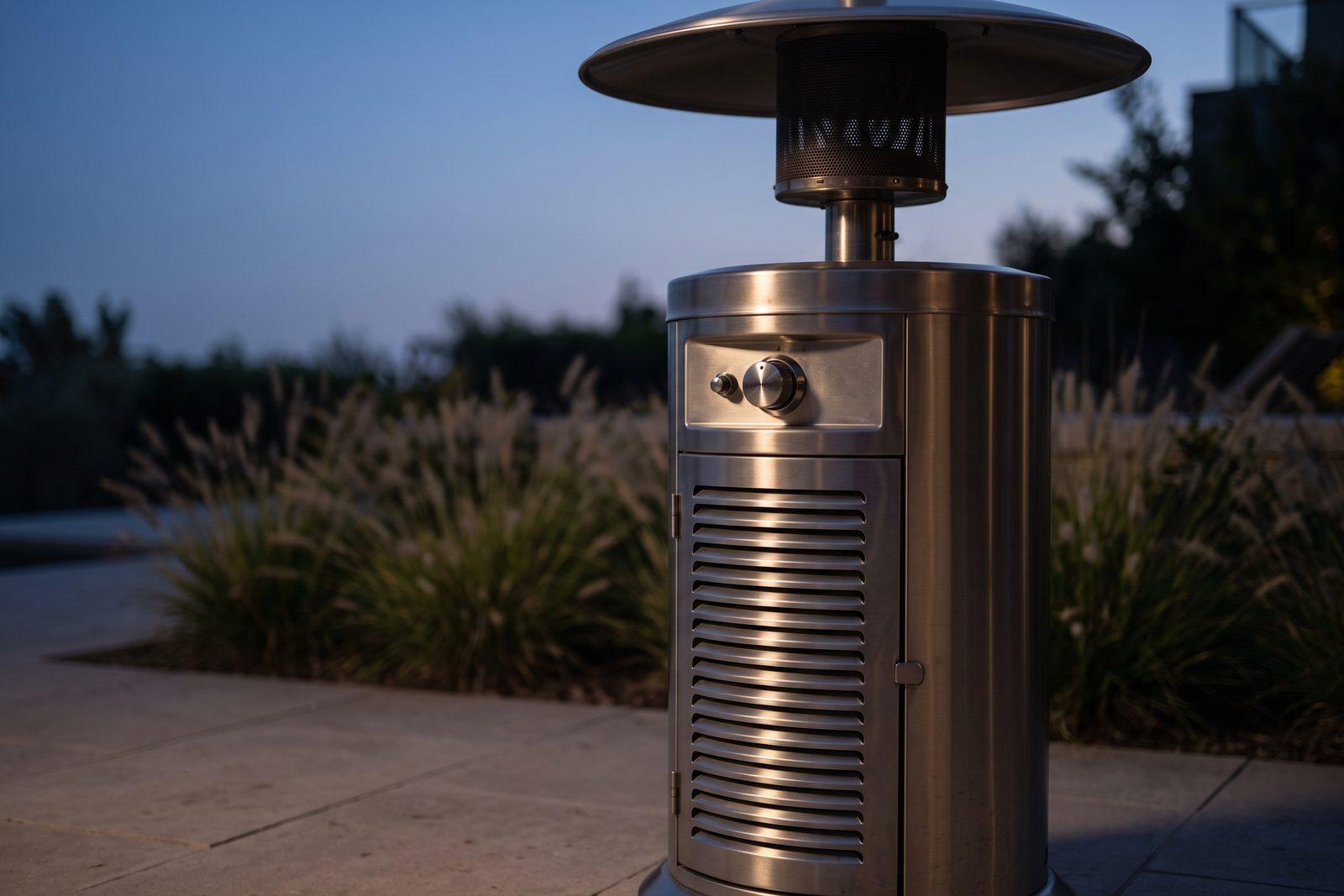
A propane patio heater that will not light or will not stay lit usually comes down to fuel, ignition or a blocked burner. The troubleshooting tables in four heater manuals and one maker's support page list a closed, empty or frosted cylinder, air in the gas line, a dead igniter battery, a blocked orifice, a control knob released too soon and a base that is not level. Checking the cylinder, the knob, the batteries and the ground is owner work. The pilot, the thermocouple, the regulator and gas pressure belong to a qualified technician.
This guide reads the makers' own pages (Mi-T-M, Heatstrip, Bromic and Lava Heat Italia) with propane safety guidance from the Propane Education & Research Council (PERC). Firepit HQ has not tested any heater, and your own manual outranks this page.
If You Smell Gas, Stop Before Anything Else
PERC calls a propane leak an emergency, and the manuals agree on the first moves. Mi-T-M's manual says to shut off the gas to the appliance, put out any open flame and, if the odor continues, call the gas supplier. Bromic's freestanding manual adds the fire department and says to keep away from the heater. PERC's order is to get away immediately, avoid sparks (no light switches, no open flames), call your propane retailer, 911 or the fire department from a safe distance, and have a qualified professional check the system before you use it again. It says to turn the gas off at the tank, unless you suspect the leak is at the tank.
Mi-T-M adds that propane odorant can fade, so smell alone does not always find a leak. The check the manuals describe is soapy water: Mi-T-M mixes one part dish detergent with three parts water, applies several drops to the connections and watches for bubbles. The gas fire pit safety guide walks through the same test.
Lighting has a hazard of its own. Mi-T-M warns that holding the control knob in for more than 10 seconds before the gas ignites causes a ball of flame. Heatstrip says to light its heater standing to the side, never in front, and Bromic says to turn its freestanding heater on from behind it with nobody in front.
Why Won't a Propane Patio Heater Light?
Four documents give a troubleshooting row for a burner that will not light.
| Document | Causes listed for a burner that will not light |
|---|---|
| Mi-T-M propane patio heater manual, PDF p. 23 | Cylinder frosted over, blockage in the orifice, control knob not in the ON position |
| Heatstrip X-DGR32PLP manual, PDF p. 17 | Air in the gas line, blockage in the gas line, igniter not sparking, cylinder turned off, cylinder empty |
| Bromic Tungsten Portable manual, PDF p. 24 | Gas valve off, tank empty, opening blocked, loose connections, low gas pressure, bad thermocouple, and a cause listed only as "not in correct location" |
| Lava Heat Italia support page | Cylinder valve closed, air in the gas line, frosted cylinder below 40°F, dead ignition batteries (2G and Opus models), tripped anti-tilt switch |
The valve and the cylinder. Lava Heat Italia calls a closed cylinder valve the most common reason a heater will not ignite. It has you open the valve fully, then wait 10 seconds before trying again. Heatstrip's connection steps open the cylinder valve only a quarter to a half turn while you check the connections for leaks. The fire pit version of this guide covers the valve order that HPC and The Outdoor Plus print for cylinders that limit flow. None of the heater manuals above describes that device, so follow yours.
A spark. Mi-T-M's igniter takes an AAA battery. Heatstrip lists an igniter that is not sparking and says to repair the lead, electrode or piezo, or replace the battery. Lava Heat Italia's remote-start 2G and Opus models run on two D batteries in the control box, and a POWER light that stays dark when you press the button means the batteries are likely dead. Bromic's freestanding manual has you press the spark button first and look for sparks at the ignition rods. If you see none, it says not to go on and to get help.
Air in the line. Heatstrip lists air in the gas line first and says to purge it. Lava Heat Italia says to hold the knob for 1 to 2 minutes after connecting a new cylinder or after storage, until you smell propane steadily, and never past 2 minutes. PERC's safety guide takes a harder line: never try to let air out of the gas line, because you will release gas. Whether a purge is an owner step on your model is a question for your maker.
A blocked path. Mi-T-M lists a blocked orifice, Heatstrip a blocked gas line and Bromic a blocked opening. Spiders and insects nest in burner tubes and orifices, and Lava Heat Italia calls that a frequent problem after seasonal storage. Mi-T-M says the nesting can damage the heater and make it unsafe to use.
Level ground. Lava Heat Italia's heater has an anti-tilt switch that disables ignition if the unit leans. The maker asks for hard, level ground (not grass or a soft surface) with all four feet touching. The 2024 International Fire Code requires a portable outdoor gas heater to carry a tilt or tip-over switch that shuts off the gas if the heater tilts more than 15 degrees from the vertical (Section 4103.1.2.2.3). Lava Heat Italia ties a tower that will not light while it leans to that switch. If it still will not light on level ground, Lava Heat Italia says the switch may be faulty and to contact customer service.
Pilot Lights but Goes Out When You Let Go of the Knob
Lava Heat Italia explains that the thermocouple, a heat sensor at the pilot, needs time to warm up before it holds the pilot valve open on its own. The makers give different hold times.
| Document | Hold after the flame lights | If it does not light or goes out |
|---|---|---|
| Mi-T-M, PDF p. 19 | Release the knob 10 seconds after ignition | Close all valves and wait at least 5 minutes |
| Heatstrip X-DGR32PLP, PDF p. 16 | Keep pressing for 10 seconds | Turn the gas off at the source, wait at least 5 minutes, then retry |
| Bromic Tungsten Portable, PDF p. 22 | Hold the controls for 10 seconds | Wait 5 minutes, then repeat the step |
| Lava Heat Italia support page | Hold a full 30 seconds after the pilot lights, then release slowly | No wait is stated on that page |
Use the time in your own manual. If the pilot still drops out after a longer hold, the causes the makers list are the same ones. Lava Heat Italia lists dirt or webs around the pilot, a loose fitting where the pilot tube meets the gas valve and a faulty thermocouple. Bromic's freestanding table lists loose connections, a bad thermocouple, a gas leak in the line, a lack of fuel pressure and a nearly empty tank. Bromic puts cleaning the dirty area, replacing the thermocouple and refilling the tank in a column headed "What ONLY an authorised service technician can do."
PERC is blunter: if a pilot light is difficult to light or repeatedly goes out, never try to fix or troubleshoot the problem yourself, and contact a qualified professional. Lava Heat Italia has owners tighten the pilot fitting and clean around the pilot, so the makers split on who does it. Follow the stricter wording and leave anything at the pilot to the technician.
Cold Air, Frost and a Low Cylinder
A cold, frosted or low cylinder can starve a burner that is otherwise fine. Mi-T-M's checklist says its heater operates at reduced efficiency below 40°F. Its table lists a frosted cylinder under "Burner Won't Light" (wait until the cylinder warms up and defrosts) and, under "Burner Flame Is Low," an outdoor temperature below 40°F with a cylinder less than a quarter full (use a full cylinder). Lava Heat Italia gives the same pair, frost on the cylinder with air below 40°F and a tank under a quarter full, and answers both with a full cylinder (for frost it also allows waiting for the tank to warm).
PERC explains why. A container vaporizes propane more slowly when the outside air is colder or when it holds less liquid, according to its Technical Pocket Guide. Its safety guide adds that propane cools as it leaves the cylinder, so a cylinder can chill while the appliance it feeds runs hot. PERC's example there is a grill. PERC also says never to keep a cylinder warm with an external heat source. Let it warm on its own, as Mi-T-M says, or swap it for a full one.
The propane tank runtime calculator figures hours per cylinder from your heater's rated input.
Low Flame, Bent Hoses and Out-of-Level Bases
Bromic's freestanding table lists a bent or twisted supply hose for a low flame, fixed by straightening it and leak-testing the hose. It lists low gas pressure and a base that is not level for an emitter that glows unevenly.
Lava Heat Italia calls low gas pressure from a nearly empty tank the most common cause of a weak flame, and replaces a tank under a quarter full. Its list goes on to a knob not turned to the full HIGH stop, blocked burner orifices, and last a faulty regulator, when the tank is full, the knob is on HIGH and the burner is clean. The fix is a replacement hose and regulator assembly from customer service. Mi-T-M, Bromic and Heatstrip also say to use only the part the maker specifies. Heatstrip lists a poor gas supply, an inoperative gas control and insufficient gas under a main burner that will not light fully.
Yellow Flame, Black Smoke and Popping Noises
Mi-T-M describes a healthy flame as blue with straight yellow tops, and Lava Heat Italia as blue at the base with straight yellow tops. Mi-T-M says excessive yellow or thick black smoke points to an obstruction of airflow through the burners, so turn the heater off. Its table answers thick black smoke with a blockage in the burner to be cleaned inside and outside, and carbon build-up with dirt or film on the reflector and burner screen, cleaned with warm soapy water.
Heatstrip's table for a yellow flame lists the injector, gas pressure, dust in the venturi and blocked burner ports. Lava Heat Italia calls insects or carbon in the burner the most common cause, and adds a burner that has shifted in the control box. If excessive yellow tipping comes with a gas smell, it says to turn the heater off at once and diagnose it before using it again. Popping or banging has the same cause. Lava Heat Italia says a slight pop when the burner is switched off is normal.
The makers split on who cleans. Mi-T-M and Lava Heat Italia describe cleaning the burner holes with a heavy-duty pipe cleaner and compressed air once the heater has cooled, and Lava Heat Italia turns the gas off first. Bromic's freestanding manual limits maintenance to authorized service personnel, caps compressed air at 20 psi and warns against clearing ports with toothpicks, which can break off and block them. Mi-T-M says only a qualified service person should repair gas passages.
Soot matters beyond looks. PERC says soot on an appliance may mean the gas is not burning completely, which can raise carbon monoxide, and to contact a qualified professional. The Consumer Product Safety Commission (CPSC) calls CO a colorless, odorless, poisonous gas made by the incomplete burning of fuels that include propane and natural gas.
Wall and Ceiling Gas Heaters With Electric Ignition
Bromic's Tungsten Gas wall and ceiling heaters are gas appliances with a 110 V control that draws under 2 A on the specification table. A heater that will not start can have a power problem or a gas problem. The manual's troubleshooting table sends "Heater will not turn on" to two trades: an authorized electrician checks the power supply and an authorized gas fitter checks the gas supply.
For a heater that turns on and then cycles on and off, the table lists too little flame on the ionisation rod, drafty conditions and a weak earth connection. The fixes are to check and set gas pressure and clear the burner venturi and injectors, to stop using the heater in high wind, and to replace the wiring harness and clean connections. Its "No gas" row lists air in the line, a closed manual shutoff valve, a sticking regulator and a regulator installed backward, and its "Low ceramic tile surface temperature" row adds an undersized gas pipe and by-products that are not adequately ventilated.
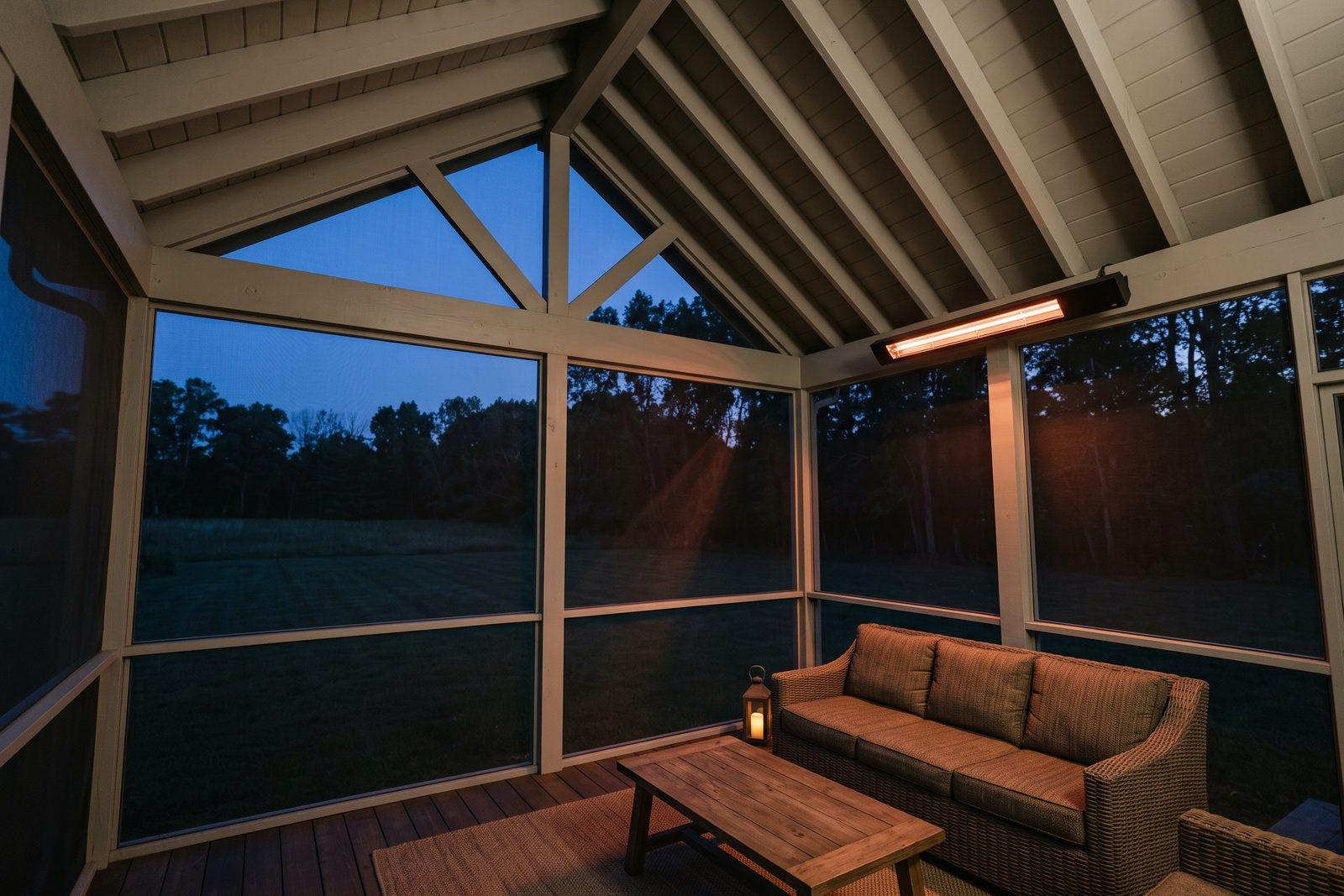
Most of that is trade work. My reading is that the lines a homeowner can act on are the closed shutoff valve and the weather. Bromic designs the heater to work in winds up to 10 mph and says it is subject to reduced performance or failure in high wind. The ventilation line connects to where the heater is mounted, and outdoor heaters for covered patios goes through the open-air rules. For a porch, patio heater in a screened porch works through what the manuals count as open.
Owner Checks and Technician Work
This table follows the wording in the manuals, taking the stricter one where they differ.
| An owner can check, as the manuals describe | Hand to a qualified technician, gas fitter or electrician |
|---|---|
| Smell for gas, then stop and follow the steps above | Gas pressure and gas line size (gas fitter, per Bromic's gas manual) |
| Cylinder valve open, cylinder full and not frosted | Pilot and thermocouple (PERC and Bromic), and gas passages and components (Mi-T-M) |
| Control knob position, the hold time and the wait your manual gives | Replacing a regulator or hose with the maker's specified part (all four makers name the part, and Bromic says repair is for a qualified service person) |
| Batteries in the igniter, remote or control box | Igniter lead, electrode and piezo repair (Heatstrip) |
| Hard, level ground and all feet touching, for the tilt switch | A tilt switch that stays tripped on level ground (Lava Heat Italia: contact customer service) |
| Straighten a bent hose and leak-test with soapy water | Power supply and wiring on a wall or ceiling gas heater (electrician, per Bromic) |
| Clean the reflector and burner screen | Clearing burner blockages (Bromic's technician column) and the annual inspection (Mi-T-M and Bromic) |
Mi-T-M, Heatstrip and Bromic all ask for a qualified service person to inspect the heater at least annually. Mi-T-M also wants a thorough inspection before each half year of use.
Before You Call the Maker
Have these ready. Mi-T-M's manual asks for the model number, serial number and date and place of purchase on every service call. Heatstrip's parts list asks for the model and serial number, and Lava Heat Italia asks for your model number. The rest of this list is my suggestion.
- The model and serial number (Heatstrip's are on the CSA label on the heater), and the date and place of purchase.
- The fuel, the cylinder size, how full it is and the air temperature.
- What the heater does and when: no spark, a spark but no flame, a flame that drops out when you release the knob, or trouble only in wind.
- The cylinder valve and knob positions and the hold time you used.
- Photos of the burner, orifice and pilot area, taken when the heater is cool.
If you smell gas at any point, stop and use the steps at the top. Local codes can limit where a portable propane heater sits, so check the state fire code library, and the patio heater on a deck guide goes through the 5 ft rules. The makers are profiled at Bromic, Heatstrip and Lava Heat Italia.
Common Questions
Why won't my propane patio heater light?
The makers' troubleshooting tables list a closed, empty or frosted cylinder, a blocked orifice or gas line, air in the line, a control knob not in the ON position, a dead igniter battery and, on Lava Heat Italia's towers, a tripped anti-tilt switch. Check the cylinder, knob, battery and level ground first. If it still will not light, the thermocouple and gas pressure are for a qualified technician.
Why does my patio heater go out when I let go of the knob?
The thermocouple needs time to heat before it holds the pilot valve open. Mi-T-M, Heatstrip and Bromic say to hold the knob 10 seconds after ignition, and Lava Heat Italia says 30. If the pilot still drops out, the makers list dirt at the pilot, a loose fitting, a bad thermocouple or low fuel pressure. PERC says never to troubleshoot a pilot that repeatedly goes out yourself.
Why is my propane patio heater flame so low?
The makers list low gas pressure, a cylinder under a quarter full in air below 40°F, a bent or twisted hose, a control knob not turned fully on, blocked burner orifices and a faulty regulator. Mi-T-M and Lava Heat Italia say to use a full cylinder, and Bromic says to straighten the hose and leak-test it. Replace a regulator or hose only with the maker's specified part.
Does cold weather keep a propane patio heater from lighting?
It can. Mi-T-M and Lava Heat Italia both list a frosted cylinder, and Mi-T-M says its heater runs at reduced efficiency below 40°F. PERC says a container vaporizes propane more slowly when the air is colder or the liquid level is lower. Let the cylinder warm on its own or swap in a full one, and never heat it with an external source.
How long should I wait before relighting a patio heater?
Use the wait in your manual. Mi-T-M, Heatstrip and Bromic all say at least 5 minutes after turning the gas off, so the unburned gas can clear. Mi-T-M also warns that holding the control knob in for more than 10 seconds before the gas ignites causes a ball of flame. If you smell gas, shut it off, put out any flame and, if the smell continues, keep away and call the gas supplier or fire department.
Can I replace a patio heater thermocouple myself?
The documents point to a technician. Bromic lists replacing the thermocouple under what only an authorised service technician can do, and PERC says never to fix or troubleshoot a pilot that repeatedly goes out yourself. Lava Heat Italia sends thermocouple orders through its customer service with your model number. Read your manual and warranty before you open anything.
Sources
- Mi-T-M Corporation, Propane Patio Heaters Operator's Manual MH-0042-PM11 (37-1494-E-071322): information to have ready for service calls (PDF p. 3), carbon monoxide and ventilation notice (p. 5), general safety instructions including the gas odor steps and odorant note (p. 9), leak check and cylinder warnings (p. 18), lighting and re-lighting (p. 19), operation, flame description and checklist (p. 20), maintenance (p. 22), troubleshooting table (p. 23)Checked
- Heatstrip, X-DGR32PLP Head and Stand US Manual (portable propane): model and serial number on the CSA label for parts orders (PDF p. 2), annual inspection by a qualified service person and replacement regulators and hoses as specified by the maker (p. 3), connecting a cylinder (p. 15), lighting instructions (p. 16), troubleshooting table (p. 17)Checked
- Bromic, Tungsten Smart-Heat Portable Heater Installation, Instruction and Service Manual (cover: Version 2.2 USA / CAN; the file name says V1.8): gas odor warning (PDF p. 1), specifications (p. 5), operating instructions (p. 22), maintenance and servicing (p. 23), troubleshooting table with owner and technician columns (p. 24)Checked
- Bromic, Tungsten Smart-Heat Gas Installation, instruction and service manual, Version 2.3 USA - Canadian: specifications and 110 V control (PDF p. 5), wind rating (p. 6), troubleshooting table (p. 25)Checked
- Lava Heat Italia, Troubleshooting & Diagnostics (owner support page for its flame towers): heater won't light, pilot won't stay on, low flame, yellow flame, popping noises, gas smell and leak checkChecked
- Propane Education & Research Council, Safety Guide for Propane Users (PRC-101063D, 2025): what to do if you suspect a leak (printed p. 2), propane odor (p. 3), pilot lights and when to use a qualified professional (pp. 5 and 7), soot buildup (p. 8), never try to heat up a tank (p. 11), small cylinders and cooling during use (p. 19)Checked
- Propane Education & Research Council, The Propane Technical Pocket Guide, 4482-BR-21 v3, Vaporization Rates (printed p. 9): the rate is lower when the outside air is colder or the container holds less liquidChecked
- International Code Council, 2024 International Fire Code (Version 2.1, Feb 2026), Chapter 41, Section 4103.1.2.2.3 (portable outdoor gas-fired heating appliances: tilt or tip-over switch that shuts off the gas if the appliance is tilted more than 15 degrees from the vertical)Checked
- U.S. Consumer Product Safety Commission, Carbon Monoxide Fact Sheet: CO is a colorless, odorless, poisonous gas made by the incomplete burning of fuels that include propane and natural gasChecked
About the Author
James Darren Writes the Firepit HQ guides on fire features, fuel and fire codes. Every figure in them is cited to its source with the date it was checked.