

Fire Pit Covers and Accessories
A fire pit cover is the normal answer to rain and snow, and the manuals set rules for when it goes on and comes off. This page also covers what makers publish about wind guards, hoses, tank enclosures and screens.
Our online store opens in 2027. Nothing on this page is for sale yet, and we claim no dealer relationship with any manufacturer. Until then, this page explains the category so you can choose well wherever you buy.
What to Know Before You Buy
The manuals say more about covers and wind guards than about any other accessory, so the decisions below follow them.
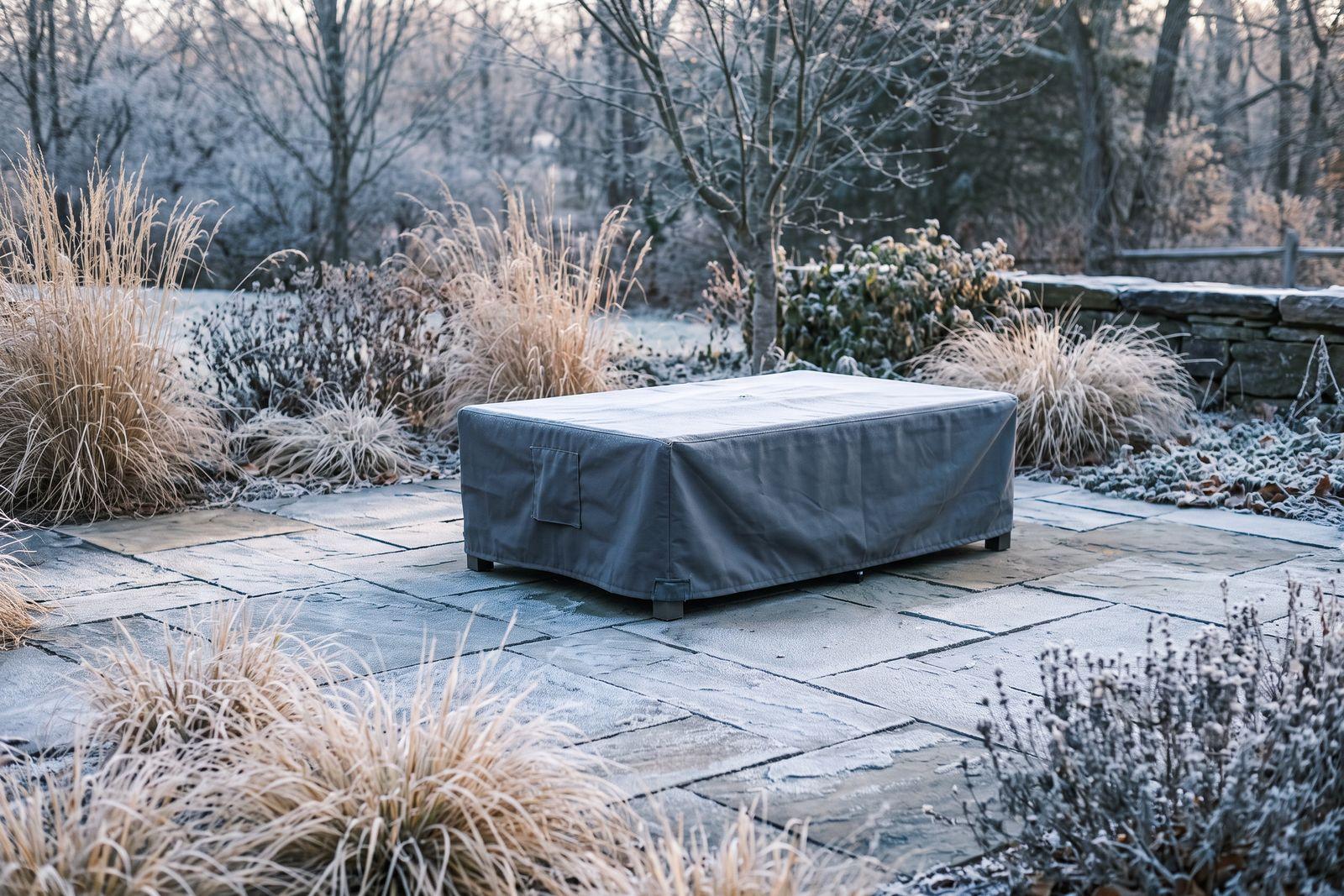
- Cover. A cover is the normal winter answer. HPC says a fire pit must always be covered when not in use, The Outdoor Plus makes a cover a warranty requirement, and Firegear recommends a ventilated one. The guide on how to winterize a gas fire pit has the full cover rules.
- Wind guard. Firegear calls a glass guard optional but practical in windy areas. The fire glass vs lava rock guide lists the guard sizes and warranties, and whether gas fire pits give off heat covers wind and where the heat goes.
- Regulator and hose. On propane, four of the five makers in the hidden tank guide supply the regulator and hose with the table, and Firegear sells its regulator separately. The guide compares what each manual says.
- Cylinder. Hours per fill depend on the burner's rating, which the propane tank runtime guide works out.
Sizes, Output and Fuel
Wind guards are sized to the burner. HPC lists round guards from 23 to 48 inches and square ones from 25 to 49, plus rectangle and linear shapes. Firegear's tempered glass windshields run 17 to 60 inches wide in round, stand 8 inches tall in round and 6 inches in rectangular and square, and are not designed for wood fires. The Outdoor Plus makes its guards from 1/4 inch polished tempered glass and sizes them to the burning area plus 2 inches on each side. Firegear and The Outdoor Plus each warrant a guard for 1 year, and The Outdoor Plus does not cover cracking. None of the maker pages the heat guide cites gives a figure for how much heat a guard keeps. Firegear calls a guard optional but practical in windy areas, and HPC and The Outdoor Plus list one as a fix for a flame that keeps going out. Both also want the pan recessed at least 2 inches below the top of the enclosure. Prism says never to use its fire features in windy conditions.
On propane, the five manuals in the hidden tank guide give 11 inches of water column. Do not swap in a regulator from another appliance, because the pressure is part of how the burner was sized, and The Outdoor Plus sizes its burner orifice to the pressure its regulator delivers. Firegear's Sanctuary 1 manual requires its own regulator, which is not included. Prism says to check hoses and fittings at least monthly for cracks, abrasions and leaks, and a damaged hose is replaced with the one the maker specifies.
A separate tank enclosure is an accessory too. Firegear lists an optional 20 lb enclosure, SANCTUARY-LPTE, in concrete at 20 by 21.5 inches tall, weighing 141 lb, with a removable lid. HPC's recommended specifications for a remote enclosure call for openings totaling 20 square inches within 5 inches of the top and 10 at floor level for a 20 lb cylinder. HPC also lists decorative copper and heavy-duty vinyl covers among its accessories.
Who Makes Them
Other makers publish covers and guards, and the guides cite them. This section names only makers whose own brand page lists accessories. The order is not a ranking.
Ohio Flame, of Columbiana, Ohio, lists spark screens, flat lids, log grates, blocking plates, fire tools and the Mars modular cook grate. The rain drain on its Liberty pits closes with a blocking plate. Its lifetime warranty on registered steel fire bowls does not cover screens or grates.
Firegear, of Huntington, Indiana, lists the optional SANCTUARY-LPTE tank enclosure. Its Sanctuary 1 manual says not to place a propane tank inside the enclosure, and to put it in an approved separate enclosure at least 60 inches from the unit.
Rules and Placement
Put a cover on only after the unit has cooled and the top is dry. Firegear recommends a ventilated cover, and one maker's manual says not to let water pool on it. Firegear says a combustible cover must come off before the fire pit is lit and calls it a severe safety hazard otherwise, and The Outdoor Plus start-up steps say to confirm all covers are removed. A cover is no fix for wet media either: Firegear says it can lessen spalling, but heavy rain and humidity may still cause popping.
Shut the gas off at the source when the pit is not in use. Take any propane cylinder off the unit and keep it outdoors, upright, with the valve closed. The Propane Education & Research Council says never to keep one in a garage, shed or basement, even in winter, and HPC says not to keep a spare under or near the appliance. Test connections with thick soapy water before the first use each season and each time a cylinder is connected. The propane tank runtime calculator gives hours per fill, which tells you when to swap a cylinder.
For a wood pit, the U.S. Fire Administration advises a metal screen over the fire. Check your local code in the fire code library, and follow the installation manual for the exact unit. A licensed gas fitter handles any gas line work.
Guides for This Category
- Winterize a Gas Fire Pit: Covers, Media and Gas SupplyTo winterize a gas fire pit, let it cool, clear water and debris, shut off the gas, keep propane cylinders outdoors and cover a dry top. Steps from the manuals.
- Fire Glass vs Lava Rock: Heat, Cleaning and Burner RulesFire glass vs lava rock: your burner manual sets the depth, makers cap glass at 1/2 inch over propane burners, and both media can crack when wet.
- Do Gas Fire Pits Give Off Heat? Will They Keep You Warm?Do gas fire pits give off heat and keep you warm? Yes, near the flame, less with distance and wind. No maker publishes a heated area, so check BTU and seating.
- Fire Pit Table With a Hidden Propane Tank: What to CheckA fire pit table with propane tank inside holds a cylinder behind a door. Check the tank size, vents, regulator, hose and valve access before you buy.
- How Long Does a 20 lb Propane Tank Last on a Fire Pit?How long does a 20 lb propane tank last on a fire pit? About 8.6 hours at 50,000 Btu/h and 6.6 hours at 65,000, at full flame. Runtime table, 11 to 100 lb.
Related Calculators
Common Questions
Should fire pits be covered?
Yes. HPC says a fire pit must always be covered when not in use, and The Outdoor Plus makes a cover a warranty requirement. Put it on after the unit has cooled and the top is dry, use a ventilated cover if you can, keep water from pooling on it, and take it off before lighting.
What can I use to cover my fire pit?
The manuals describe conditions and not a material. Firegear recommends a ventilated cover and says a combustible cover must come off before lighting, and HPC lists decorative copper and heavy-duty vinyl covers among its accessories. Whatever the cover, it goes on cool and dry, and water should not pool on it.
Do I need a fire pit wind guard?
Firegear calls a glass guard optional: not required, yet practical in windy areas. The Outdoor Plus and HPC list a guard as a fix for a flame that keeps going out. Both also want the pan recessed at least 2 inches below the top of the enclosure, and Prism says never to use its features in windy conditions.
Where do you store a propane tank for a fire pit in winter?
Outdoors, upright, with the valve closed. The Propane Education & Research Council says never to store a cylinder in a basement, garage, shed or tent, and its training material says not even in winter. Take the cylinder off the unit, and HPC says not to keep a spare under or near the appliance.
Sources
- HPC Fire Inspired (Hearth Products Controls), Push-Button / Flame Sensing Fire Pit Insert, FPPK Series, 830-FPPK: orifice and fittings leak checked annually by an NFI certified technician (printed p. 17), gas shutoff outside the enclosure (p. 18), wet lava rock, gas valve off and cover rule (p. 21), shutdown and cover after cooling (p. 22), maintaining (p. 23), troubleshooting (p. 24), fire pit cover accessory (p. 25)Checked
- The Outdoor Plus, Fire Bowl Installation Manual, Match Lit (FB-ML-M), 2026: operation, wet lava rock and cover warranty requirement (printed p. 11), start-up and maintenance (p. 12), troubleshooting and drainage (p. 13)Checked
- Firegear Outdoors, Outdoor Fire Pit Pro H-Burners & Kits, Installation and Operating Instructions, REV. D: thermal spalling caution and covers (printed p. 3), gas installation by a qualified installer (p. 5), enclosure drainage and ventilation (p. 7), safety warnings and temporary indoor storage (p. 11), maintenance and winter months (p. 13), water in a fire pit (p. 15)Checked
- Real Flame, Forest Ridge Fire Table Owner's Manual, model C1600LP: important safety information and shutting off the gas supply when not in use (printed p. 3), set-up warnings and hose checks (p. 4), LP gas tank information and storage (p. 5), wet filler (p. 8), lighting (p. 10), care and cleaning and storage (p. 11), spider and insect warning (p. 12), cold temperatures (p. 14)Checked
- Outdoor GreatRoom Company, Frequently Asked Questions: seasonal maintenance with winter and spring checklists, Supercast concrete care and maintenance, covering the table, burner drainageChecked
- Propane Education & Research Council, Safety Guide for Propane Users (PRC-101063D, 2025): if you suspect a gas leak (printed p. 2), when to use a qualified professional (p. 5), a gas line that is disconnected (p. 9), appliance connectors (p. 10), cylinder leaks and keeping the valve closed (p. 17), storing small cylinders (p. 19), testing for leaks (p. 20)Checked
- Propane Education & Research Council, Storing Propane Fuel, Lesson 9, Unit: Propane (storing small propane cylinders outside, even during the winter; printed p. 6)Checked
- HPC Fire Inspired, Match Lit Fire Pit Insert, MLFPK Series, 870-MLFPK: cylinder label, keeping the cylinder valve closed and spare cylinders (printed p. 3), no spare cylinder under or near the appliance (p. 16)Checked
- HPC Fire Inspired (Hearth Products Controls Co.), MLFPK Series Match Lit Fire Pit Insert, Installation & Operation Instructions, 870-MLFPK: cylinder label (high temperatures and the relief valve), Section 6 Remote LP Tank System Enclosure Requirements (small tank use on select models only; 54 inches, ventilation, Tables 6.1 and 6.2, access, isolation from the burner compartment, cylinder specifications)Checked
- HPC Fire Inspired, Wind Guards product page (round, square, rectangle and linear shapes and sizes)Checked
- Firegear Outdoors, Glass Windshields, Installation and Operating Instructions, REV. F: model sizes and heights (PDF p. 1), not for wood-burning fire pits (PDF p. 2)Checked
- Firegear Outdoors, The Anatomy of a Gas Fire Pit (blog, 2021-06-02): fire media and windshieldsChecked
- Firegear Outdoors, Limited Warranty, the two-page document embedded on its warranty page (products manufactured after 01/01/2026): windshields, 1 yearChecked
- Firegear Outdoors, Limited Warranty, a FlipBuilder document embedded on the warranty page (online.flipbuilder.com/gearhead/qwhm/); the page shows a last-modified date of 2026-02-06Checked
- The Outdoor Plus, Glass Wind Guards product page: 1/4 inch polished tempered glass, sizing ruleChecked
- The Outdoor Plus, 2025 Product Warranty: wind guards (1 year, cracking not covered), ornaments and media not warrantied, certified models cannot be alteredChecked
- The Outdoor Plus, Match Lit Fire Pit Insert Manual (2024): enclosure construction and pan recess (PDF p. 3), burning media, acceptable media and depth limits (PDF p. 5), wind and wet lava rock (PDF p. 6), maintenance (PDF p. 6)Checked
- Prism Hardscapes, Moderno Series Installation Guide: product contents including 30 lb of media (PDF p. 6), wet media and wind (PDF p. 9), amount of media (PDF p. 12)Checked
- Prism Hardscapes, Porto Series Installation, Operation, & Maintenance Manual: Section 1.2 (product drawings naming the tank size and the propane access door), Section 2 (safety instructions), Section 3.1 (clearances, liquid propane requirements), Section 3.2.2 (propane tank unit), Section 4.1.1 (vents, valve), Section 5 (hose note)Checked
- Firegear Outdoors, Sanctuary 1 Outdoor Fire Feature Installation and Operating Instructions, REV. C: printed p. 5 (ventilation, placement surface, LP tank outside the enclosure at least 60 inches away), printed p. 15 (optional LP Tank Enclosure SANCTUARY-LPTE)Checked
- Firegear Outdoors, Sanctuary Series 1-56 installation manual (Rev. C), flexible piping section and accessories pageChecked
- The Outdoor Plus, Fire Pit Manual (PDF modified 2024-09-30): Gas Requirements (regulator and hose, cylinder specification), Set-Up Steps 1 to 3 (placement, connection, leak test), Cleaning, Maintenance and Storage, Clearance from CombustiblesChecked
- Ohio Flame, Accessories collectionChecked
- Ohio Flame, Liberty Fire Pits collectionChecked
- Ohio Flame, Lifetime Warranty pageChecked
- Ohio Flame, Media page; The Rust Belt pageChecked
- Firegear Outdoors, Contact pageChecked
- U.S. Fire Administration, Outdoor Fire Safety (metal screen over wood-burning fires)Checked
Hear When the Store Opens
We'll email you when the store opens in 2027.